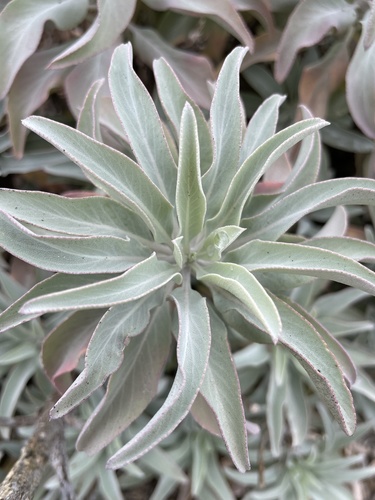
white sage
Salvia apiana
A shimmering icon of the American West, White Sage is more than just a fragrant shrub—it is a vital hub for native pollinators and a centerpiece of California's wild landscapes. Its silvery foliage and towering flower stalks make it a stunning and essential addition to any wildlife-friendly garden.
Quick Identification
Size
Grows 3–5 feet (0.9–1.5 meters) tall and wide; flower stalks can reach up to 6 feet (1.8 meters) in height.
Colors
Shimmering silvery-white to pale grey-green foliage; delicate white to very pale lavender flowers on tall stalks.
Key Features
- Intensely aromatic silvery-white leaves
- Tall, arching flower stalks rising 2-3 feet above the foliage
- Large white flowers specifically shaped for bumblebee pollination
- Evergreen shrub with a rounded, spreading habit
When You’ll See Them
Behavior
White sage is a cornerstone of the California coastal sage scrub ecosystem. Unlike many garden plants, it is highly adapted to extreme drought, entering a semi-dormant state during the peak of summer heat to conserve moisture. Its most striking "behavior" is the way it interacts with its primary pollinators; the flowers have a unique platform that requires heavy insects like large carpenter bees or bumblebees to land on them, triggering a mechanism that brushes pollen onto the insect's back.
For humans, this plant has deep cultural and spiritual significance, particularly among Indigenous communities like the Chumash and Tongva, who have used it for millennia for medicine and ceremony. In a backyard setting, it acts as a magnet for biodiversity, creating a micro-habitat that supports a wide range of native insects and birds that rely on its seeds after the blooming season concludes.
EverydayEarth exclusive
Camera Tips
Because white sage is a stationary plant, your camera setup should focus on the incredible variety of wildlife it attracts. To capture the fascinating relationship between the flowers and their pollinators, position your camera on a tripod approximately 2 to 3 feet away from a fresh flower spike. Aim for a slightly downward angle to see the 'landing pad' of the blossoms where bees arrive. Since the plant’s silvery leaves reflect a significant amount of light, try to place the camera so the sun is behind or to the side of the lens to avoid overexposure and harsh lens flare.
For the best action, set your camera to a 'Burst' or 'High-Speed Video' mode. White sage is famous for attracting large Xylocopa (carpenter bees) and various bumblebee species. These insects move quickly from flower to flower, so a fast trigger speed is essential for a clear shot. If you are using an AI-powered camera like those featured on EverydayEarth, the white sage acts as a perfect natural 'lure.' You do not need artificial food or bait; the nectar-rich flowers do the work for you. Early morning light (between 8:00 AM and 10:00 AM) often provides the most dramatic lighting on the white leaves and catches the first wave of hungry insects.
Don't forget the ground-level perspective! Setting a camera at the base of the shrub can reveal hidden visitors like California Quail, which often seek shade and forage for fallen seeds beneath the canopy of the sage. In the evening, you might even catch a glimpse of nocturnal moths visiting the pale flowers, which stand out even in low light. During the winter months, when the plant is less active, focus your camera on the architecture of the leaves to capture how they collect morning dew—a vital water source for many small backyard creatures in arid climates.
Similar Species
Species that look similar or are commonly confused with white sage.
Frequently Asked Questions
Record white sage at your habitat
Connect a camera to start building your own species record — AI identifies every visitor automatically.