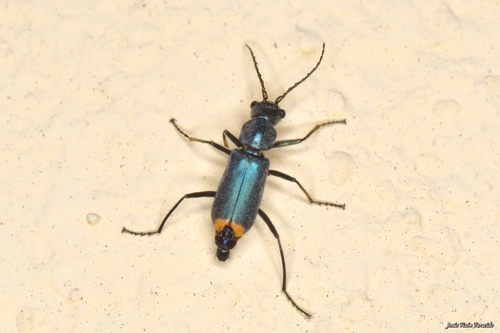
Yellow-fronted Soft-winged Flower Beetle
Clanoptilus elegans
Draped in metallic emerald with a signature golden face, the Yellow-fronted Soft-winged Flower Beetle is a miniature masterpiece. This tiny predator-pollinator hybrid is a sign of a thriving summer garden.
Quick Identification
Size
4–6 mm (0.16–0.24 inches) in length
Colors
Metallic blue-green or emerald body; bright yellow-to-orange patch on the front of the head; reddish-orange tips on the wing covers (elytra).
Key Features
- Shimmering metallic green-blue body
- Distinctive bright yellow forehead (frons)
- Bright reddish-orange tips on the ends of the wing covers
- Comb-like (pectinate) antennae on males
When You’ll See Them
Geographic range
Where Does the Yellow-fronted Soft-winged Flower Beetle Live?
Native to the European continent, the Yellow-fronted Soft-winged Flower Beetle is primarily distributed across Western and Central Europe. Its core range includes the United Kingdom, France, Germany, and the Benelux countries, where it thrives in temperate climates. While it is broadly distributed, it shows a slight preference for lowland areas and coastal regions where the salt spray and sandy soils support its favorite wildflower species.
Basemap © OpenStreetMap contributors
Behavior
The Yellow-fronted Soft-winged Flower Beetle is a highly active, diurnal insect that is most visible during the warmest parts of the day. These beetles are frequently observed scurrying across the flower heads of the carrot family (Apiaceae), where they engage in a complex search for both food and mates. Unlike many beetles with hard, rigid wing covers, the Melyridae family has relatively soft, flexible elytra, which gives them a slightly more delicate appearance and greater agility when navigating dense floral structures.
Mating behavior in this species is particularly fascinating. Males possess specialized 'excitant' organs near the base of their antennae or on their heads. These glands secrete chemicals that the female tastes before deciding to mate. This chemical dialogue is a primary way the species interacts, making them a marvel of evolutionary chemistry. To humans, they are entirely harmless and serve as excellent indicators of a healthy, biodiverse garden ecosystem.
EverydayEarth exclusive
Camera Tips
Capturing the Yellow-fronted Soft-winged Flower Beetle on an AI-powered backyard camera requires a specialized approach due to their tiny size. Standard trail cameras will likely miss them; instead, utilize a dedicated macro-lens attachment or a camera designed for close-up insect monitoring. Position your camera within 6 to 12 inches of high-pollen 'landing pad' flowers, such as Cow Parsley, Hogweed, or Common Daisy, which are their preferred stages for foraging and mating.
Lighting is your best friend when trying to highlight the metallic sheen of this species. Angle your camera so it captures the direct morning or midday sun; the UV rays will make their emerald bodies 'pop' against the floral background, making it much easier for AI detection software to trigger. Ensure the camera is set to a high shutter speed or a high-frame-rate video mode, as these beetles move in quick, jerky bursts that can easily result in motion blur on slower devices.
To attract them specifically to your camera's field of view, try planting a 'pollinator pocket' of white-flowering umbellifers. Avoid using chemical pesticides in the area, as these beetles are highly sensitive to toxins. Because they are most active during peak heat, ensure your camera is positioned in a spot that doesn't overheat but still receives plenty of light. Checking your footage during June will yield the highest success rate, as this is the peak of their brief but vibrant adult life cycle.
Similar Species
Species that look similar or are commonly confused with Yellow-fronted Soft-winged Flower Beetle.
Frequently Asked Questions
Record Yellow-fronted Soft-winged Flower Beetle at your habitat
Connect a camera to start building your own species record — AI identifies every visitor automatically.