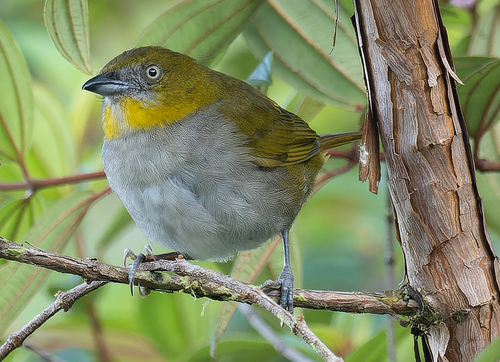
Yellow-throated Chlorospingus
Chlorospingus flavigularis
A burst of sunshine in the mountain mist, the Yellow-throated Chlorospingus is the social leader of the tropical highlands. Watch for their bright yellow bibs as they lead colorful mixed flocks through the forest canopy.
Quick Identification
Size
13.5–15 cm (5.3–5.9 inches) in length; weighs approximately 17–25 grams (0.6–0.9 oz)
Colors
Olive-green upperparts and wings; distinctive bright lemon-yellow throat and upper breast; greyish-white belly and underparts; grey head with dark eyes.
Key Features
- Bright yellow throat and upper breast patch
- Olive-green back and wings
- Greyish face and crown
- Active social behavior, usually found in flocks
When You’ll See Them
Behavior
Unlike many forest birds that stick to the dark interior, this species is quite comfortable at the forest edge and in lush garden borders. They are incredibly active, constantly hopping between branches and performing acrobatic maneuvers to reach small fruits or to glean insects from the undersides of leaves. Their movement is jerky and fast, making them a delightful challenge for wildlife observers.
EverydayEarth exclusive
Camera Tips
To capture high-quality footage of the Yellow-throated Chlorospingus, you must think vertically. These birds are mid-story specialists, meaning they rarely visit the ground. Mounting your AI camera at eye level—roughly 5 to 7 feet high—on a tree trunk or a post near dense shrubbery is ideal. Avoid pointing the camera directly into the dark forest interior; instead, aim it toward a 'sunlight gap' or a flowering shrub where the bird's vibrant yellow throat can be illuminated by natural light.
Because this species travels in fast-moving 'waves' of birds, your camera settings are critical. We recommend setting your trigger interval to the shortest possible time and using a 'burst' photo mode or a 15-second video clip. If you see one Yellow-throated Chlorospingus on your footage, there are likely four or five more just out of frame. A fast shutter speed is necessary to freeze their rapid, twitchy movements and avoid motion blur.
If you are trying to attract them to a specific backyard spot, native fruiting trees like Miconia or other Melastomes are much more effective than traditional bird feeders. However, if you do use a feeder, try offering mashed bananas or papaya on a high platform. Position the camera so it has a clear view of a 'staging branch'—a nearby twig where the bird will naturally land and scan the area before jumping onto the feeder. This is where you will get your clearest, most iconic 'hero shots'.
Lastly, consider the audio. These birds are very vocal, and their high-pitched calls often trigger other birds to join the party. If your camera has a microphone, ensure it is enabled, as the distinct 'sip' calls of the Chlorospingus can help you identify the start of a mixed-species flock event even before the birds enter the frame.
Similar Species
Species that look similar or are commonly confused with Yellow-throated Chlorospingus.
Common Chlorospingus
Features a distinct white 'comma' or spot behind the eye and lacks the bright yellow throat patch.
Ashy-throated Chlorospingus
Has a much drabber, greyish throat and lacks the vibrant yellow contrast seen in flavigularis.
Yellow-throated Euphonia
Much smaller with a shorter tail; males have dark blue-black upperparts rather than olive-green.
Frequently Asked Questions
Record Yellow-throated Chlorospingus at your habitat
Connect a camera to start building your own species record — AI identifies every visitor automatically.