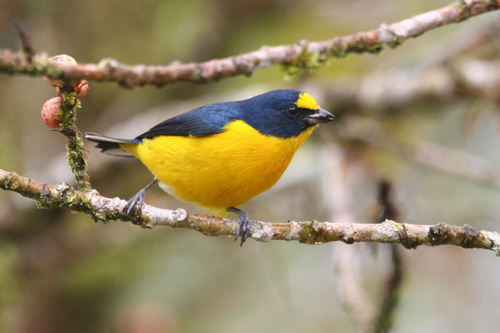
Yellow-throated Euphonia
Euphonia hirundinacea
A tiny spark of gold in the forest canopy, the Yellow-throated Euphonia is a master of mimicry and a specialist of the treetops. With its vibrant plumage and restless energy, it is a prized sight for any backyard observer in Central America.
Quick Identification
Size
Length: 3.5-4 inches (9-10 cm); Weight: 0.4-0.6 oz (11-17 g)
Colors
Males: Glossy blue-black upperparts, yellow crown patch, and bright yellow throat and belly. Females: Olive-green above and pale grayish-white below.
Key Features
- Male features a bright yellow throat and breast
- Small, stubby dark bill
- Short tail and pointed wings
- Glossy blue-black back and wings on males
When You’ll See Them
Behavior
Yellow-throated Euphonias are energetic and highly social finches, often seen in pairs or small family groups. They are known for their restless movement, flitting quickly through the canopy in search of ripe fruit. While they aren't particularly shy, their small size and preference for staying in the mid-to-upper levels of the trees can make them a challenge to spot without a keen eye.
One of their most remarkable traits is their vocal talent. These birds are skilled mimics, frequently incorporating the calls of other bird species—such as flycatchers and wrens—into their own songs. This results in a complex, shrill melody that changes pitch rapidly. During the nesting season, they are territorial near their nesting sites, which are typically small, globe-shaped structures hidden in tree cavities or among epiphytes.
EverydayEarth exclusive
Camera Tips
To successfully capture the Yellow-throated Euphonia on an AI camera, you need to think vertically. These birds rarely spend time on the ground, so mounting your camera at eye level or higher is essential. Aim for a height of 6 to 12 feet, focusing on a branch near a known food source like mistletoe or a fruiting shrub. If you are placing your camera in a tree, use a sturdy strap or a screw-in mount to ensure stability, as even slight wind can trigger false motion alerts at high altitudes.
While traditional seed feeders won't attract this species, a 'fruit station' is highly effective. Secure overripe bananas or halved papayas to a platform or branch. Place the camera about 4 to 6 feet away from the fruit to ensure the bird fills the frame without being so close that the lens cannot focus. Because they are tiny and move with quick, nervous jerks, set your camera to its fastest trigger speed (ideally 0.2 seconds or less) and use a high-frame-rate video setting to capture their fluid movements.
Water is another powerful lure for Euphonias. They are particularly attracted to the sound of moving water. An elevated birdbath with a solar-powered dripper or fountain is a magnet for these birds, especially during the dry season. Position your camera to look across the surface of the water to catch the reflection of their bright yellow feathers. Early morning light provides the best color saturation, so try to orient the camera so the sun is behind it, illuminating the bird’s golden breast.
Finally, consider the seasonal timing. While they are present year-round, they are much more vocal and active during the breeding months (March through July). During this time, they are more likely to investigate nesting materials or visit water sources more frequently. If your camera has a 'time-lapse' mode, consider using it during the peak morning hours to monitor fruit trees where they may be feeding silently in the upper canopy.
Similar Species
Species that look similar or are commonly confused with Yellow-throated Euphonia.
Scrub Euphonia
The male Scrub Euphonia has a dark throat, whereas the Yellow-throated male has a yellow throat.
Thick-billed Euphonia
The Thick-billed male has a much larger yellow patch on its forehead and a significantly heavier bill.
Elegant Euphonia
Elegant Euphonias feature a bright light-blue crown and nape, which is absent in the Yellow-throated species.
Frequently Asked Questions
Record Yellow-throated Euphonia at your habitat
Connect a camera to start building your own species record — AI identifies every visitor automatically.