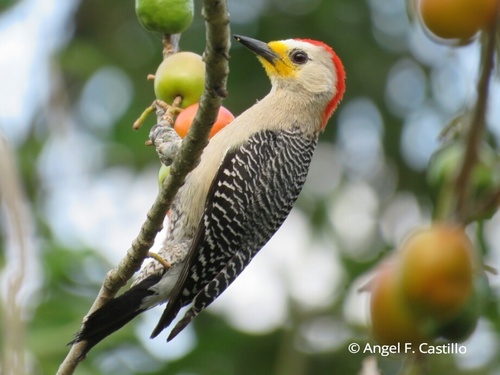
Yucatán Woodpecker
Melanerpes pygmaeus
Meet the miniature master of the Maya forest. The Yucatán Woodpecker is a bold, zebra-striped resident that brings a splash of tropical color and rhythmic drumming to backyards across the peninsula.
Quick Identification
Size
Length: 15–18 cm (5.9–7.1 in); Weight: 30–40 g (1.1–1.4 oz); Wingspan: 30–35 cm (12–14 in)
Colors
Zebra-patterned black and white back with a pale buff-gray breast. Males have a red crown and nape; females have red only on the nape. Both sexes feature yellow-orange patches around the base of the bill.
Key Features
- Zebra-like black and white horizontal barring on back
- Small size, significantly smaller than the Golden-fronted Woodpecker
- Yellow or orange-yellow patch at the base of the bill (nasal tufts)
- Reddish-pink 'vent' or undertail area
When You’ll See Them
Geographic range
Where Does the Yucatán Woodpecker Live?
This vibrant woodpecker is a specialist of the North American tropics, specifically centered on the Yucatán Peninsula. Its native range is concentrated in southeastern Mexico, extending through the states of Yucatán, Campeche, and Quintana Roo, while also reaching into northern Belize and the Petén region of Guatemala. Unlike many other forest birds, it has adapted well to human-modified landscapes across this limestone-based peninsula and is a common sight in both wild and semi-urban areas.
Basemap © OpenStreetMap contributors
Behavior
The Yucatán Woodpecker is an energetic and vocal bird, often heard before it is seen. It spends much of its day hitching up tree trunks and branches in search of food, using its stiff tail feathers for support. While they are territorial during the breeding season, they are generally tolerant of human presence and can frequently be spotted in gardens or the edges of developed areas where native trees remain standing.
These birds are known for their rapid drumming on hollow wood, which serves both to communicate territory boundaries and to attract mates. They often forage in pairs or small family groups, moving with a characteristic undulating flight pattern between trees. Despite their small size, they are quite bold and will vigorously defend their nesting cavities from larger bird species.
EverydayEarth exclusive
Camera Tips
To capture the Yucatán Woodpecker on camera, place your device on a vertical trunk or a sturdy horizontal branch of a native fruit tree like a Gumbo-limbo (Bursera simaruba). Position the camera approximately 5 to 8 feet off the ground, angled slightly upward to capture the bird's characteristic 'hitching' movement as it climbs. Because of their small size, a focal distance of 1 to 3 feet is ideal for capturing crisp details of their intricate zebra-patterned plumage.
While they are natural foragers, these woodpeckers are easily attracted to backyard setups using halved oranges, papayas, or dragon fruit mounted directly to a wooden post or tree trunk. In the dry season, a water feature such as an elevated birdbath with a small solar dripper is a magnet for this species. The sound of moving water is especially effective at drawing them into the camera's field of view during the hotter parts of the day.
Set your camera to record short, high-resolution video clips (10-15 seconds) rather than just still images. This allows you to record their unique drumming patterns and the 'jerk-and-stop' foraging motion that helps identify the species. For the best lighting, aim for early morning or late afternoon when the sun is lower, as the harsh midday tropical sun can wash out the subtle yellow and red highlights around their face and crown.
Similar Species
Species that look similar or are commonly confused with Yucatán Woodpecker.
Frequently Asked Questions
Record Yucatán Woodpecker at your habitat
Connect a camera to start building your own species record — AI identifies every visitor automatically.