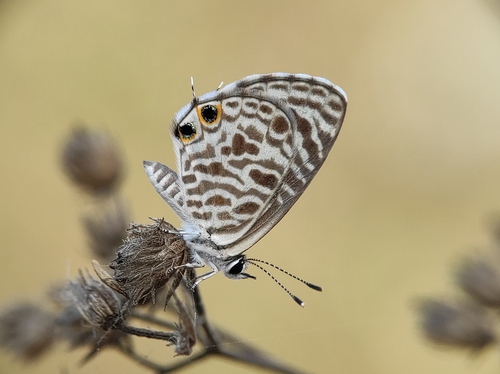
Zebra Blue
Leptotes plinius
A tiny marvel of mimicry, the Zebra Blue brings a dash of striped elegance to the garden. Watch for its signature 'zebra' patterns and clever false-head trick as it dances among the Plumbago blooms.
Quick Identification
Size
Wingspan of 22–30 mm (0.87–1.18 inches)
Colors
Underside features white and dark brown zebra-like stripes; males have a dull violet-blue upperside, while females are brownish with blue dusting at the wing bases.
Key Features
- Distinctive dark brown and white zebra-striped pattern on wing undersides
- Two small black eyespots (ocelli) on the trailing edge of the hindwing
- Delicate, thread-like tails extending from the hindwings
- Males possess a soft violet-blue sheen on the upper wing surface
When You’ll See Them
Behavior
One of its most fascinating behaviors is its use of 'false heads.' When perched, the Zebra Blue often wiggles its hindwings, causing the delicate tails to twitch like antennae. Combined with the small eyespots nearby, this tricks predators like birds and jumping spiders into attacking the non-vital rear end of the butterfly, allowing the Zebra Blue to escape with its actual head intact. They are also known for 'puddling,' where they congregate on damp soil to suck up essential salts and minerals.
EverydayEarth exclusive
Camera Tips
Lighting is a critical factor for small insect photography. Place your camera so that the sun is behind it, fully illuminating the flowers. This avoids the harsh silhouettes that occur with backlighting and helps the camera's sensor pick up the subtle violet-blue sheen on the wings of the males. If your camera allows for manual settings, use a high shutter speed or a high frame rate (60fps) to minimize motion blur during their frequent, rapid wing movements.
Because these butterflies are quite small, they can sometimes be missed by standard motion triggers. If your camera has a 'detection zone' feature, highlight the specific flower heads most frequently visited. If you are struggling to get them to land, try creating a 'puddling station'—a small patch of damp sand mixed with a little sea salt or compost. Placing a camera a few inches above this damp patch can result in longer video clips, as the butterflies stay relatively still while drinking minerals from the soil.
Seasonality plays a role even in warmer climates. Look for the peak of the Plumbago blooming cycle, as this is when the Zebra Blue population will be most concentrated in your yard. In the early morning, they are often slightly slower as they wait for the sun to warm their wing muscles, making 8:30 AM to 10:00 AM an ideal window for capturing clearer, less frantic footage before they reach full 'operating temperature' in the midday heat.
Similar Species
Species that look similar or are commonly confused with Zebra Blue.
Frequently Asked Questions
Record Zebra Blue at your habitat
Connect a camera to start building your own species record — AI identifies every visitor automatically.