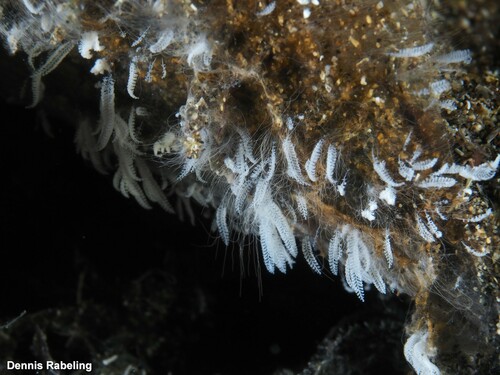
Zoothamnium
Zoothamnium niveum
Often mistaken for a tiny underwater plant or a dusting of snow, Zoothamnium niveum is actually a thriving colony of single-celled organisms. This 'white feather' ciliate is a masterpiece of marine symbiosis, farming its own food on its back.
Quick Identification
Size
Colonies typically reach 10-20 mm (0.4-0.8 inches) in height; individual ciliate cells are microscopic.
Colors
Brilliant opaque white throughout the feather-like branches; the main stalk is typically translucent or light grey.
Key Features
- Distinctive feather or 'Christmas tree' shape
- Bright white color due to symbiotic bacteria
- Stalks that rapidly contract into a ball when disturbed
- Found attached to submerged marine surfaces like mangrove roots
When You’ll See Them
Behavior
Zoothamnium niveum is a colonial ciliate that functions more like a complex organism than a simple collection of cells. Its most fascinating behavior is its symbiotic relationship with sulfur-oxidizing bacteria. The ciliate provides a stable home and moves its 'feather' branches through the water to ensure the bacteria receive both oxygen from the upper water layers and sulfide from the lower layers. This 'farming' behavior allows the colony to thrive in environments where other life struggles.
These colonies are highly sensitive to physical vibrations and light changes. When threatened by a passing fish or a diver's touch, the entire colony can contract in milliseconds, pulling its delicate white branches into a tiny, inconspicuous translucent knot. Once the danger passes, it slowly unfurls back into its beautiful plume-like shape to continue feeding.
EverydayEarth exclusive
Camera Tips
Capturing Zoothamnium niveum requires a specialized approach since these are marine micro-organisms. To see them in a coastal 'backyard' setting—such as a dock or a seawall—you will need a waterproof action camera or a trail camera inside a high-quality underwater housing. Because these colonies are small, a macro lens attachment is essential. Position your camera just 2–5 inches away from submerged mangrove roots or dock pilings that are sheltered from heavy wave action.
Lighting is the biggest challenge when filming these 'snow-white' creatures. Their bacterial coating is highly reflective, so avoid using a direct, powerful flash which will wash out all the detail. Instead, use side-lighting or diffused video lights to highlight the delicate, feathery texture of the branches. If you are using a camera with adjustable settings, slightly underexpose the image to preserve the details in the bright white areas.
Since these ciliates contract instantly at the slightest vibration, ensure your camera mount is rock-solid. Avoid attaching the camera to a floating dock that moves with the waves; instead, mount it to a stationary piling or a weighted tripod on the seabed. Set your camera to a high-frame-rate video mode to capture the incredible speed of their contraction, or use a timelapse setting with one frame every 5 seconds to observe how the colony expands and shifts its branches to 'feed' its bacterial garden.
Check the tides before setting your gear. The best visibility usually occurs during an incoming high tide when clearer ocean water flows into the mangroves or canals. Look for white, fuzzy patches on dark surfaces—this is the telltale sign of a Zoothamnium niveum colony. During the summer months, when organic decomposition is high, you may find massive 'forests' of these ciliates covering several inches of a single root.
Similar Species
Species that look similar or are commonly confused with Zoothamnium.
Frequently Asked Questions
Record Zoothamnium at your habitat
Connect a camera to start building your own species record — AI identifies every visitor automatically.