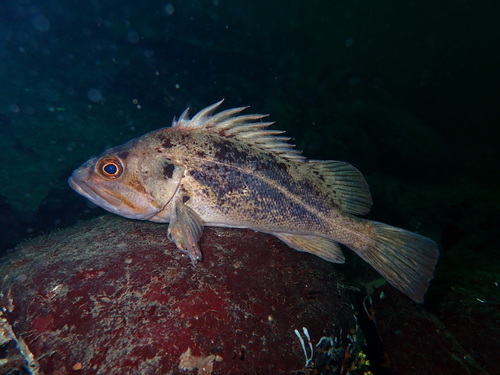
Brown Rockfish
Sebastes auriculatus
Often called the 'Brown Bomber' by local anglers, this hardy rockfish is a permanent resident of the Pacific coast's rocky shadows. With its striking mottled camouflage and territorial nature, it is one of the most rewarding species to discover via underwater backyard cameras.
Quick Identification
Size
Typically 30-45 cm (12-18 inches), reaching a maximum length of 56 cm (22 inches) and weighing up to 2.5 kg (5.5 lbs).
Colors
Mottled brown, tan, and yellowish body with darker brown blotches; features a distinct dark spot on the operculum.
Key Features
- Distinctive dark brown spot on the operculum (gill cover)
- Deeply incised membranes between the 13 dorsal spines
- Mottled brown and tan camouflage
- Broad, stocky head with a large mouth
When You’ll See Them
Geographic range
Where Does the Brown Rockfish Live?
The Brown Rockfish is a staple of the Northeastern Pacific Ocean, inhabiting coastal waters from the southeastern reaches of Alaska down to central Baja California, Mexico. It is particularly prevalent along the coastlines of British Columbia, Washington, Oregon, and California, with high population densities in protected inland waters such as the Puget Sound and San Francisco Bay. While they are native to the North American west coast, they are strictly marine and have no introduced populations in other regions.
Basemap © OpenStreetMap contributors
Behavior
The Brown Rockfish is a remarkably sedentary and territorial species, often spending its entire adult life within a small patch of rocky reef or a single pier structure. Unlike many of its more social relatives, the Brown Rockfish is primarily solitary. During the day, it is a master of stillness, often resting directly on the seafloor or wedged into a crevice, using its mottled coloration to blend seamlessly with the surrounding rocks and seaweed.
As a nocturnal predator, its behavior shifts significantly after sunset. Under the cover of darkness, it becomes much more active, emerging from its hiding spot to hover just above the substrate in search of prey. While generally cautious, they are known to be quite bold around man-made structures like marinas and public piers, where they have become accustomed to the presence of human activity and artificial lighting.
EverydayEarth exclusive
Camera Tips
To successfully capture a Brown Rockfish on camera, you need to focus on 'structure.' If you have access to a dock, pier, or a backyard seawall, mount your underwater camera near the base of pilings or alongside submerged rock piles. These fish are benthic, meaning they live on the bottom, so ensure your camera is positioned within 1-2 feet of the seafloor and angled slightly downward to catch them as they rest or forage.
Since the Brown Rockfish is most active at night, lighting is your biggest challenge. Standard white lights can sometimes startle fish or attract too many 'sea snow' particles (plankton and debris) that obscure the view. Using an infrared (IR) light source is the best way to observe their natural nocturnal behavior without disturbance. If you are using a trigger-based AI camera, set the sensitivity to account for moving kelp or surges in the water column to avoid filling your storage with empty clips.
While we don't recommend heavy chumming, placing a small, mesh-enclosed bait bag containing crushed crab or squid near the camera's field of view can be incredibly effective. The scent will draw the resident rockfish out of its hiding spot to investigate. Because they are territorial, once you find one on camera, you are likely to see the same individual night after night, making them excellent subjects for long-term observation or time-lapse projects.
Similar Species
Species that look similar or are commonly confused with Brown Rockfish.
Copper Rockfish
Lacks the dark spot on the gill cover and has a lighter, often whitish area along the rear half of its lateral line.
Quillback Rockfish
Has much higher, more pronounced spines on the front of its dorsal fin and more yellow or orange mottling.
Vermilion Rockfish
Usually much redder in color and prefers deeper water than the Brown Rockfish.
Frequently Asked Questions
Record Brown Rockfish at your habitat
Connect a camera to start building your own species record — AI identifies every visitor automatically.