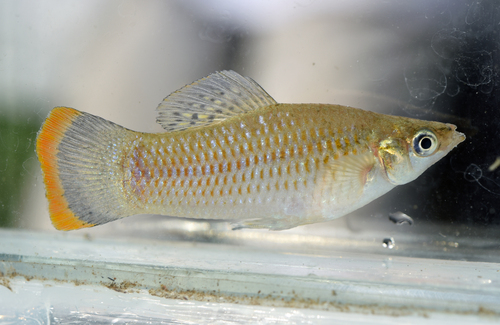
Common Molly
Poecilia sphenops
The Common Molly is a resilient and vibrant livebearer that brings life to the shallow waters of Mexico and Central America. Known for its incredible adaptability to different salinities, it is a favorite for both aquarium enthusiasts and backyard pond watchers.
Quick Identification
Size
4-10 cm (1.5-4 inches) in length; females are generally larger and heavier than males.
Colors
Wild specimens are typically olive-gray or silvery with rows of small spots on the sides; domestic variants appear in solid black, marble, gold, and white.
Key Features
- Streamlined, slightly compressed body
- Small, upturned mouth designed for surface feeding
- Short dorsal fin with 8-11 rays
- Males possess a rod-like anal fin (gonopodium) for reproduction
When You’ll See Them
Geographic range
Where Does the Common Molly Live?
Native to the tropical and subtropical regions of North and Central America, the Common Molly's core population is centered in Mexico, stretching south into Guatemala and Honduras. Because of their popularity in the aquarium trade, they have established introduced populations in many warm-weather locations worldwide, including Florida, Hawaii, and parts of Southeast Asia. Where Does the Common Molly Live? They are most at home in slow-moving or stagnant waters, particularly those with high sun exposure that promotes heavy algae growth.
Basemap © OpenStreetMap contributors
Behavior
Common Mollies are highly social and energetic fish that thrive in loose schools. They are remarkably adaptable, capable of living in freshwater, brackish estuaries, and even full-strength marine environments. In their natural habitat, they spend the majority of their daylight hours moving between submerged vegetation and rocky substrates, where they graze on algae and search for small aquatic insects.
These fish are livebearers, meaning the females give birth to fully formed, free-swimming fry rather than laying eggs. This reproductive strategy makes them highly successful colonizers. While generally peaceful, males can be competitive with one another, often engaging in shimmering displays to establish dominance or attract mates. They are curious by nature and will often approach new objects in their environment, making them excellent subjects for underwater backyard observation.
EverydayEarth exclusive
Camera Tips
To capture the best footage of Common Mollies in a backyard pond or stream, placement of your underwater camera is critical. Position the lens in shallow water, roughly 6 to 12 inches deep, near a patch of aquatic plants or an algae-covered rock. These are their primary foraging grounds. Angle the camera slightly toward the surface; since mollies have upturned mouths and frequently feed at the top, this angle captures their most natural behavior and often utilizes the shimmering natural light from above.
Lighting is your best friend when filming these iridescent fish. The best time for recording is during the mid-morning or early afternoon when the sun is directly overhead or slightly angled, penetrating the water column to reveal the subtle blues and greens in a wild molly’s scales. If your water is murky, try to keep the subject within 18 inches of the lens to maintain clarity. High-frame-rate settings (60fps or higher) are recommended to capture their quick, darting movements without blur.
You can encourage Common Mollies to congregate in front of your camera by using a simple baiting technique. Place a small amount of spirulina-based fish food or a blanched zucchini slice on a weighted clip directly in the camera's field of view. This not only brings them into the frame but also encourages natural grazing behavior, allowing you to capture high-quality, close-up footage of their unique feeding mechanics. Ensure the camera is stationary—either weighted or on a small underwater tripod—to avoid the 'seasick' effect in the resulting video.
Similar Species
Species that look similar or are commonly confused with Common Molly.
Sailfin Molly
Much larger dorsal fin in males and a slightly more elongated body shape.
Guppy
Generally smaller with more dramatic, flowing tail fins and more varied color patterns in wild males.
Shortfin Molly
Very similar to P. sphenops, but often distinguished by subtle differences in scale counts and fin ray numbers.
Frequently Asked Questions
Record Common Molly at your habitat
Connect a camera to start building your own species record — AI identifies every visitor automatically.