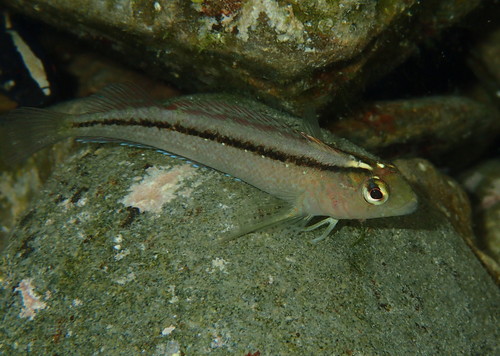
Common Triplefin
Forsterygion lapillum
The Common Triplefin is the tiny, darting king of New Zealand's rock pools. With its unique three-finned silhouette and master-class camouflage, it is a fascinating subject for any coastal explorer.
Quick Identification
Size
Maximum length of 70 mm (2.75 inches); weight is typically less than 10 grams (0.35 oz)
Colors
Body is usually pale or translucent with 6-7 dark vertical bars or mottled patches for camouflage. Breeding males develop a striking jet-black head and darker fins.
Key Features
- Three distinct dorsal fins on the back
- Blunt snout and large eyes positioned high on the head
- Thick, fan-like pectoral fins used for 'propping' on rocks
- Mottled brown and cream camouflage pattern
When You’ll See Them
Geographic range
Where Does the Common Triplefin Live?
Native to the temperate southwestern Pacific, the Common Triplefin is an endemic species found exclusively in the waters surrounding New Zealand. Its range extends across the entire coastline of the North and South Islands, as well as Stewart Island and the Chatham Islands. This species is a hallmark of the New Zealand seashore, thriving in almost every rocky coastal environment from the high-tide mark down to depths of approximately 30 metres.
Basemap © OpenStreetMap contributors
Behavior
The Common Triplefin is a highly territorial and active bottom-dweller. Unlike many fish that swim through the water column, triplefins spend most of their time 'perched' on rocks or cobbles using their large pectoral fins. They move in short, sharp bursts, darting from one crevice to another to avoid predators or to snag passing prey. Their movements are so rapid that they can often appear to 'teleport' across a rock pool floor.
During the breeding season, which typically spans from late winter through summer, males become extremely territorial. They choose a nesting site—usually the underside of a flat stone—and perform displays to attract females. After spawning, the male takes on the role of guardian, aggressively defending the eggs from other fish and even larger invertebrates until they hatch. They are generally bold and inquisitive, often ignoring human observers if they remain still.
EverydayEarth exclusive
Camera Tips
Capturing the Common Triplefin requires an underwater setup, such as an AI-powered action camera or a waterproof trail camera capable of close-focusing. The best location is a stable, medium-sized rock pool that remains isolated during low tide. Place your camera on the floor of the pool, weighted down with a small diving weight or tucked securely between two stones so it doesn't shift with the surge. Aim the lens toward a flat 'stage' of cobbles or a crevice in the rocks, as these are the fish's preferred perching spots.
Because these fish are small and move with lightning speed, use a high frame rate setting (at least 60fps) to avoid motion blur. If your camera allows for macro settings or has a close-focus lens, use it; the Common Triplefin is only about 7cm long, and a standard wide-angle lens may make them look like tiny specks. Positioning the camera just 10-20cm away from a likely perching rock will yield the best detail of their intricate scale patterns and dorsal fins.
To attract triplefins into the frame, you can gently stir up the sandy substrate near the camera to release small nutrients, or place a very small mesh bag containing a crushed mussel or piece of shrimp just out of the shot. They are naturally curious and will often investigate the 'scent' quickly. Since they are most active during the day when light is plentiful, try to time your recording for a sunny day when the water in the rock pools is clear and still. Avoid filming during heavy swells, as suspended sand will cloud the water and trigger false motion alerts on AI systems.
Similar Species
Species that look similar or are commonly confused with Common Triplefin.
Estuarine Triplefin
Has a more pointed snout and is more tolerant of low-salinity water in river mouths.
Variable Triplefin
Generally larger with more complex color patterns and prefers deeper reef water over intertidal pools.
Spectacled Triplefin
Recognizable by a dark horizontal line running through the eye, whereas the Common Triplefin has vertical bars.
Frequently Asked Questions
Record Common Triplefin at your habitat
Connect a camera to start building your own species record — AI identifies every visitor automatically.