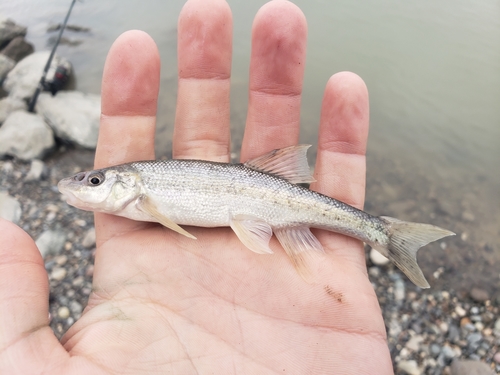
Leopard Dace
Rhinichthys falcatus
With its striking spotted pattern and love for rushing rivers, the Leopard Dace is a hidden gem of the Pacific Northwest's freshwater ecosystems.
Quick Identification
Size
Typically 6 to 12 cm (2.4 to 4.7 inches) in length
Colors
Olive-green to brownish upper body with a pale, silvery-white belly; characterized by large, dark, irregular leopard-like blotches along the sides.
Key Features
- Distinct leopard-like dark blotches on sides
- Strongly forked (falcate) caudal fin
- Small barbel present at the corner of the mouth
- Slightly overhanging upper jaw
When You’ll See Them
Geographic range
Where Does the Leopard Dace Live?
The Leopard Dace is native to the Pacific Northwest region of North America, where it is a signature resident of two major river systems. Its core range includes the Fraser River drainage in British Columbia, Canada, and the extensive Columbia River basin which spans across Washington, Oregon, and Idaho in the United States. Within these regions, it stays strictly within the freshwater networks of the interior, avoiding the saltwater of the coast.
Basemap © OpenStreetMap contributors
Behavior
The Leopard Dace is a bottom-oriented fish that thrives in the moving waters of larger river systems. Unlike some of its relatives that prefer the fastest rapids, this species is often found in the slightly slower water adjacent to main currents or in large, rocky pools. They are social creatures, often found in small groups scouring the substrate for food.
During the day, they are quite active, though they can be shy when larger predators or human shadows appear over the water. They have a specialized way of navigating the current, using their pectoral fins to hug the bottom. They do not have significant interactions with humans, but they are vital indicators of river health and serve as a key food source for larger game fish like trout and salmon.
EverydayEarth exclusive
Camera Tips
Capturing the Leopard Dace on camera requires a specialized approach since they are entirely aquatic. The most effective method is using a submersible action camera or a trail camera with a high-quality waterproof housing. For backyard riverbanks or local streams, place the camera in shallow water (6-12 inches deep) near the edge of a 'riffle'—the area where water ripples over rocks. Angle the lens slightly upward or horizontally across a patch of clean gravel, as this is where they forage for insect larvae.
While traditional 'bait' like birdseed won't work, you can attract Leopard Dace by gently disturbing a few upstream rocks to kick up natural debris and larvae, or by placing a small mesh bag filled with crushed salmon pellets or wet cat food near the camera's field of view. The scent will draw them in from downstream. Ensure the camera is securely tethered to a heavy rock or a permanent bank fixture to prevent it from washing away in the current.
Lighting is your biggest challenge underwater. In clear mountain streams, midday sun provides the best visibility; however, in more turbid valley rivers, you may need an external waterproof LED light to see the dace's 'leopard' spots clearly. Set your camera to a high frame rate (60fps or higher) if possible, as these fish move with quick, darting motions that can appear blurry on standard settings.
Seasonality plays a big role in visibility. During the spring freshet when snow melts, the water is often too murky for good filming. The best window is late summer and early autumn when water levels are lower, clarity is at its peak, and the fish are most active in the shallows. During this time, look for 'slack water'—the calm spots behind large boulders where dace rest out of the main current.
Similar Species
Species that look similar or are commonly confused with Leopard Dace.
Speckled Dace
Has a less forked tail and smaller, more uniform dark spots across the body.
Longnose Dace
Features a significantly longer, more prominent snout and prefers much faster-moving water.
Umatilla Dace
Often smaller with subtle differences in fin placement and scale counts, requiring close inspection to distinguish.
Frequently Asked Questions
Record Leopard Dace at your habitat
Connect a camera to start building your own species record — AI identifies every visitor automatically.