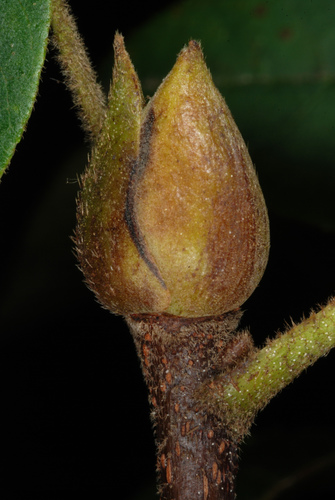
mockernut
Carya tomentosa
A titan of the eastern woods, the mockernut hickory is legendary for its iron-hard wood and the golden autumn canopy that signals the change of seasons.
Quick Identification
Size
Typically reaches 15–30 meters (50–100 feet) in height with a trunk diameter of 0.5–1 meter (1.5–3 feet).
Colors
Dark green leaves turning brilliant golden-yellow in autumn; gray to dark gray bark; light brown nut husks.
Key Features
- Deeply furrowed, interlacing gray bark forming a diamond pattern
- Large pinnately compound leaves with 7-9 leaflets and densely hairy undersides
- Thick-shelled, globose nuts with a small, sweet kernel
- Strong, pleasant citrus-like fragrance when leaves or twigs are crushed
When You’ll See Them
Geographic range
Where Does the mockernut Live?
The mockernut hickory is a quintessential North American species, natively spanning the vast eastern half of the United States and reaching into southern Ontario, Canada. Its core range extends from the rolling hills of Massachusetts and New York, southward through the Appalachian Mountains to the humid coastal plains of Florida, and westward into the pine-oak forests of eastern Texas and Kansas. This tree is the most abundant of all the hickories in the American South, thriving in diverse climates from the temperate north to the subtropical Gulf Coast.
Basemap © OpenStreetMap contributors
Behavior
The mockernut hickory is a stalwart of the eastern American forest, known for its incredible longevity and slow, steady growth. Reaching ages of up to 500 years, this deciduous tree acts as a foundational species in its ecosystem. It doesn't move, but it actively shapes its surroundings through a massive taproot system that stabilizes soil and a canopy that provides essential nesting sites for high-canopy birds. It is also somewhat allelopathic, meaning it can influence the growth of certain plants beneath its canopy, though it is much more neighborly than its cousin, the Black Walnut.
Throughout the year, the mockernut cycles through dramatic changes that dictate the behavior of local wildlife. In spring, it produces long, drooping yellow-green catkins that dance in the wind to spread pollen. By late summer, the focus shifts to its fruit. The tree produces heavy, thick-hulled nuts that are a primary food source for forest dwellers. For humans, the tree has historically been a source of exceptionally tough wood used for tool handles and a preferred fuel for smoking meats due to its intense, sweet aroma.
EverydayEarth exclusive
Camera Tips
When setting up an AI-powered camera to monitor a mockernut hickory, the best strategy is to focus on the 'wildlife traffic' the tree generates rather than the tree itself. During the autumn months (September through November), place your camera on a tripod or a nearby mounting arm roughly 2 to 3 feet off the ground, angled toward the base of the tree. The heavy drop of nuts creates a localized foraging hotspot. You’ll want a fast trigger speed to capture the frantic activity of squirrels and chipmunks as they compete for the fallen mast.
For those interested in larger visitors, mockernut hickories are a favorite for white-tailed deer and even black bears in rural areas. Set your camera slightly further back—about 10 to 15 feet from the trunk—to get a wider field of view. This allows the AI to better identify larger mammals as they move through the frame to sniff out fallen nuts. If your camera has a time-lapse mode, use it to capture the stunning transition of the foliage from deep green to vibrant gold, which usually peaks in late October.
Don't ignore the trunk itself. The deeply furrowed bark is a haven for protein-rich insects, making it a vertical highway for nuthatches, creepers, and various woodpeckers. Mounting a camera at eye level (5-6 feet) directly facing the trunk can yield incredible close-ups of these birds. Because the canopy can be quite dense, ensure your camera is positioned to handle high-contrast light; early morning or late afternoon sun filtering through the yellow leaves provides the most dramatic and beautiful natural lighting for your shots.
Similar Species
Species that look similar or are commonly confused with mockernut.
Shagbark Hickory
Features distinctive peeling bark that hangs in long, vertical plates, unlike the tight, furrowed bark of the mockernut.
Pignut Hickory
Has smoother bark, smaller leaves, and pear-shaped nuts with much thinner husks than the mockernut.
Bitternut Hickory
Recognizable by its bright sulfur-yellow winter buds and much more bitter-tasting nuts.
Frequently Asked Questions
Record mockernut at your habitat
Connect a camera to start building your own species record — AI identifies every visitor automatically.