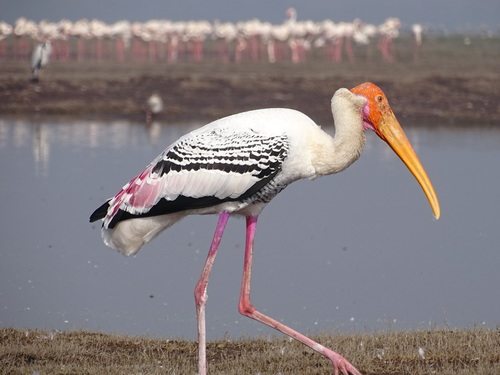
Painted Stork
Mycteria leucocephala
Adorned with delicate pink 'painted' wings and a vibrant orange face, the Painted Stork is one of Asia’s most iconic wetland residents. These graceful giants are a masterclass in patience, wading through the shallows with surgical precision.
Quick Identification
Size
Height: 93–102 cm (36.5–40 in); Wingspan: 150–160 cm (59–63 in); Weight: 2–3.5 kg (4.4–7.7 lbs)
Colors
White body with a black breast band and intricate black-and-white wing patterns. Adult birds feature prominent rose-pink tips on their inner wing feathers. The bill is bright yellow and the unfeathered facial skin is orange or reddish.
Key Features
- Large, heavy yellow bill with a downward curve
- Bright orange-red facial skin
- Delicate pink wash on the inner wing feathers (tertials)
- Black band across the chest
When You’ll See Them
Behavior
Painted Storks are highly social birds that spend their days wading through shallow wetlands in search of food. They are famous for their unique tactile feeding method, where they walk slowly through the water with their beaks partially submerged and open. When a fish brushes against the sensitive lining of their bill, it snaps shut in a fraction of a second. To help find prey, they often use one foot to stir the muddy bottom, flushing hidden fish into the open.
These birds are colonial nesters, often congregating in large numbers in the tops of trees situated near water. These 'heronries' are bustling with activity, though the storks themselves are relatively quiet, communicating mostly through bill-clattering or low, rasping moans. While they are generally non-migratory, they are known to make local movements across their range to follow the availability of water and fish as seasons change.
EverydayEarth exclusive
Camera Tips
To capture high-quality footage of a Painted Stork, camera placement is critical. These birds are tall waders that prefer the very edges of water bodies where the depth is less than 6 inches. Position your camera on a sturdy tripod or mount about 2 to 3 feet off the ground, angled slightly upward. This 'low-angle' perspective provides a much more intimate look at the bird's face and bill compared to looking down on them from a high bank. If you are placing a camera near a backyard pond, ensure it overlooks a flat, muddy shoreline rather than a steep drop-off.
Because the Painted Stork’s feeding reflex is incredibly fast, you need a camera with a quick trigger speed—ideally under 0.5 seconds. If your device supports it, use a high-frame-rate video setting (60fps or higher) to capture the moment they snap their bill shut on a fish. For still photos, burst mode is your best friend. Since these birds have bright white feathers and dark bands, mid-day sun can cause 'blown-out' highlights. Aim for the 'golden hours' of early morning or late afternoon when the low sun brings out the subtle pinks in their wing feathers.
Seasonal changes drastically affect where these birds congregate. During the dry season, as water levels drop, fish become concentrated in smaller pools, which acts as a natural lure for storks. If you have a large property with a wetland, look for these receding pools to place your trail camera. Avoid using artificial baits; instead, focus on providing a clear line of sight to a natural feeding spot. Keep the lens clean from water splashes, as their foot-stirring behavior often sends mud and water droplets flying toward the camera.
Similar Species
Species that look similar or are commonly confused with Painted Stork.
Asian Openbill
Smaller with a characteristic gap in its grey beak and lacks the pink feathers and orange face.
Wood Stork
Found in the Americas; has a dark, scaly featherless head and lacks the pink wing tips of the Painted Stork.
Black-necked Stork
Much larger with a massive, straight black bill and iridescent dark neck feathers.
Frequently Asked Questions
Record Painted Stork at your habitat
Connect a camera to start building your own species record — AI identifies every visitor automatically.