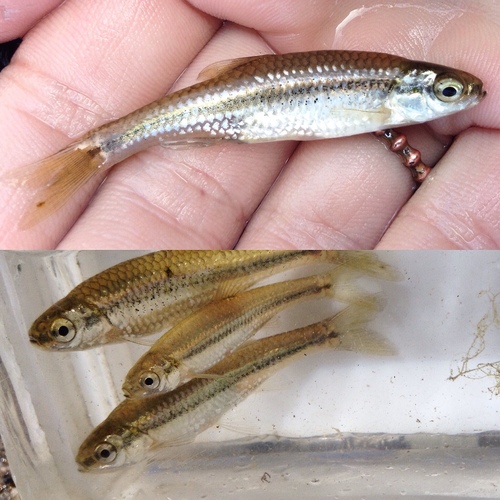
Pugnose Shiner
Miniellus anogenus
The Pugnose Shiner is a rare, shimmering resident of the underwater world, serving as a tiny sentinel for water purity. Hiding within dense weed beds, this elusive minnow is a prized find for any backyard aquatic explorer.
Quick Identification
Size
1.5 to 2.2 inches (38 to 56 mm) in length; weight typically less than 0.1 oz (2 grams)
Colors
Straw-colored to pale yellow back; silvery sides with a distinct dark lateral stripe running from the snout to the tail; white belly
Key Features
- Extremely small, nearly vertical mouth
- Dark lateral line that passes through the eye and onto the chin
- Large eyes relative to its tiny body size
- Slender, slightly compressed body shape
When You’ll See Them
Behavior
The Pugnose Shiner is a secretive and delicate member of the minnow family, known for its extreme sensitivity to environmental changes. Unlike many bolder shiner species, this tiny fish is highly dependent on clear water and dense aquatic "forests" of submerged plants like pondweed and coontail. They are social creatures, typically moving in small, loose schools of 10 to 30 individuals, staying deep within the safety of vegetation to avoid larger predators like Bass or Northern Pike.
Because they require such high water quality and specific plant life, their presence is often viewed by biologists as a badge of honor for a healthy ecosystem. They are not aggressive and spend much of their day meticulously picking tiny organisms off the stems of aquatic plants. They rarely interact with humans and are easily overlooked by casual observers due to their diminutive size and shy nature.
EverydayEarth exclusive
Camera Tips
Capturing the Pugnose Shiner requires a specialized underwater setup, such as a waterproof action camera or a submersible trail camera positioned near the edge of a weed bed. Because these fish are exceptionally small and live in dense vegetation, you should position your camera lens roughly 6 to 12 inches away from a clear opening within a stand of Pondweed (Potamogeton) or Coontail. Use a weighted tripod or a sand-anchor mount to keep the camera steady, as even a slight current can cause motion blur on such a small subject.
Lighting is the most critical factor for underwater success. Aim for a deployment depth of 2 to 5 feet where natural sunlight can still penetrate the water column. If your camera supports it, use a high frame rate (60fps or higher) to capture their quick, darting movements clearly. Avoid using high-intensity artificial lights, as this species is diurnal and may be spooked by unnatural glares in the crystal-clear water they inhabit.
While traditional baiting isn't recommended for these specialized feeders, you can encourage activity by placing your camera near 'natural' highways—clear channels between thick patches of vegetation. Early summer is the best time for filming, as the fish are more active during their spawning season. Always ensure your camera lens is perfectly clean and, if possible, use a 'macro' or close-focus mode to capture the defining characteristic of this species: its tiny, upturned mouth.
Similar Species
Species that look similar or are commonly confused with Pugnose Shiner.
Blackchin Shiner
The Blackchin Shiner has a larger, more horizontal mouth and the dark pigment on its chin is more pronounced than the Pugnose.
Blacknose Shiner
The Blacknose Shiner lacks the upturned mouth and has a lateral stripe that looks more like a series of dark crescents along its side.
Ironcolor Shiner
The Ironcolor Shiner has a deeper body and a darker, more metallic-looking stripe that extends more heavily into the fins.
Frequently Asked Questions
Record Pugnose Shiner at your habitat
Connect a camera to start building your own species record — AI identifies every visitor automatically.