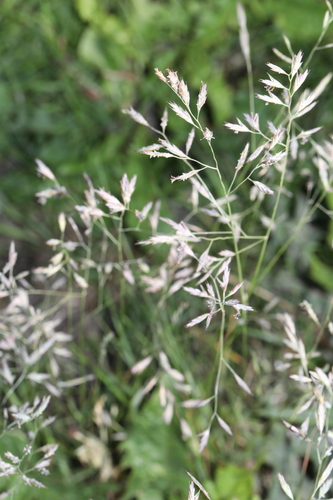
red fescue
Festuca rubra
The elegant, fine-textured Red Fescue is a backyard champion that thrives in the shadows. Known for its striking reddish base and hardy nature, it creates a lush, wild carpet that supports a hidden world of local biodiversity.
Quick Identification
Size
15-60 cm (6-24 inches) in height with fine, needle-like blades
Colors
Deep green foliage; characteristic reddish or purplish tint at the base of the leaf sheaths; reddish-brown seed heads
Key Features
- Fine, narrow leaves that are often folded or rolled
- Reddish-purple coloring at the base of the stems
- Creeping growth habit via underground rhizomes
- Loose, nodding flower panicles 3-15 cm long
When You’ll See Them
Behavior
In a backyard ecosystem, red fescue acts as a foundational species. It provides high-quality cover for ground-nesting insects and small mammals, and while it isn't the primary choice for large livestock, it is frequently browsed by wild rabbits and deer. It is also a 'hyperaccumulator,' meaning it has the unique ability to absorb and store heavy metals like arsenic from the soil, effectively helping to remediate contaminated ground.
EverydayEarth exclusive
Camera Tips
If you are using an AI-powered camera to monitor wildlife, be mindful of the wind. Red fescue's light, airy blades move easily in the breeze, which can cause hundreds of false triggers. To avoid this, set your camera's sensitivity to 'medium' or use 'Zone Detection' to focus on a specific area where the grass is less dense. Alternatively, use these movements to your advantage by setting a time-lapse mode; watching a day's worth of grass swaying in the wind can create a beautiful, cinematic 'breathing' effect for your backyard footage.
Lighting is the secret ingredient for plant photography. Position your camera to take advantage of 'backlighting' during the golden hours of 6-8 AM or 5-7 PM. When the sun is low behind the grass, it illuminates the seed heads (panicles) and makes the fine leaf edges glow, creating a halo effect. If you're looking to capture the insects that visit the grass, like the Meadow Brown butterfly, ensure your camera is set to its highest resolution to catch the tiny details of legs and antennae against the green backdrop.
Similar Species
Species that look similar or are commonly confused with red fescue.
Sheep's Fescue
Sheep's fescue grows in distinct tufts rather than 'creeping' and lacks the reddish-purple base of red fescue.
Chewings Fescue
Chewings fescue is a sub-species that lacks rhizomes, meaning it grows in clumps rather than spreading out to form a mat.
Hard Fescue
Hard fescue has a more blue-green tint to its leaves and is much more resistant to heat and drought than red fescue.
Frequently Asked Questions
Record red fescue at your habitat
Connect a camera to start building your own species record — AI identifies every visitor automatically.