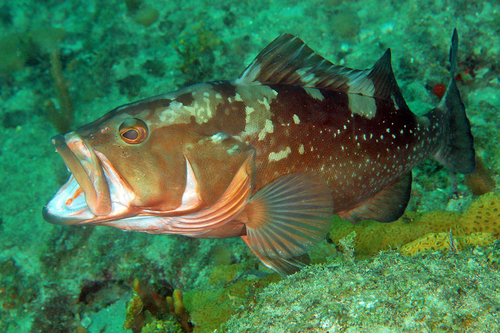
Red Grouper
Epinephelus morio
Meet the architect of the Atlantic reefs. The Red Grouper is a hardworking engineer that carves out homes in the limestone seafloor, supporting an entire community of marine life.
Quick Identification
Size
Typically 50–70 cm (20–28 in) long and weighing 7–15 kg (15–33 lbs), though large individuals can reach 125 cm (50 in) and over 23 kg (50 lbs).
Colors
Primary reddish-brown hue across the body and fins. The flanks often feature small, irregular white spots, while the fins may have dark margins and occasional blue highlights.
Key Features
- Reddish-brown color with scattered white spots
- The second spine of the dorsal fin is the longest
- Smooth, unnotched membrane between dorsal spines
- Square-shaped tail fin
When You’ll See Them
Geographic range
Where Does the Red Grouper Live?
Native to the tropical and subtropical waters of the Western Atlantic Ocean, the Red Grouper has a wide distribution that stretches from Massachusetts in the north down to southern Brazil. Its core population is most concentrated in the Gulf of Mexico and throughout the Caribbean Sea, particularly around the Florida Shelf where the limestone seafloor provides ideal habitat. While they are occasionally seen in more northern temperate waters during the summer, they are permanent residents of the warm coral reef systems of the tropics.
Basemap © OpenStreetMap contributors
Behavior
The Red Grouper is a fascinating "ecosystem engineer" known for its industrious habit of clearing sand and debris from rocky crevices and limestone holes. By using its mouth and fins to sweep away sediment, it exposes the hard substrate beneath, creating a complex habitat that benefits a wide variety of other marine life, including cleaner shrimp, smaller fish, and octopuses. They are highly territorial and will actively defend their excavated "home" from intruders.
These fish are protogynous hermaphrodites, meaning they typically begin life as females and transition to males as they grow older and larger. Socially, they are somewhat solitary but congregate in high-relief reef areas. While generally wary of humans, they are a curious species that may investigate divers who approach their territory slowly, though they often retreat into their burrows if they feel threatened.
EverydayEarth exclusive
Camera Tips
Capturing the Red Grouper on camera requires an underwater setup, such as a GoPro with a waterproof housing or a dedicated marine trail camera mounted to a weighted base. To get the best shots, position your camera near "high-relief" structures like limestone ledges or known burrows. Look for areas where the sand has been cleared away to reveal hard rock—this is a sure sign of a Red Grouper’s active territory. Setting the camera at a low angle facing the entrance of a crevice will capture their natural behavior as they maintain their home.
Baiting is highly effective for drawing them into the frame. Using a perforated PVC pipe filled with oily fish like sardines or mackerel (a "chum pot") secured within the camera's field of view will attract Red Grouper and keep them in the area longer. Be sure to mount the camera securely to a heavy lead weight or a sand anchor, as tidal currents and curious sea creatures can easily move light equipment.
Because water absorbs red light quickly, images taken deeper than 10 meters (30 feet) will often look blue or green. If you are using an AI-powered camera at depth, utilize a red filter or underwater video lights to bring out the species' namesake reddish-brown tones. Set your camera to a high frame rate (60fps or higher) to capture their quick, explosive ambush strikes, and use a wide-angle lens to ensure you capture both the fish and the fascinating reef architecture they create.
Similar Species
Species that look similar or are commonly confused with Red Grouper.
Nassau Grouper
Features dark vertical bars and a 'tuning fork' mark on its forehead, whereas the Red Grouper is more uniformly reddish-brown with white spots.
Gag Grouper
Has a more greyish-brown color with 'kiss-shaped' dark markings and a deeply notched dorsal fin membrane.
Black Grouper
Grows significantly larger and features rectangular dark blotches and a square tail with a black margin.
Frequently Asked Questions
Record Red Grouper at your habitat
Connect a camera to start building your own species record — AI identifies every visitor automatically.