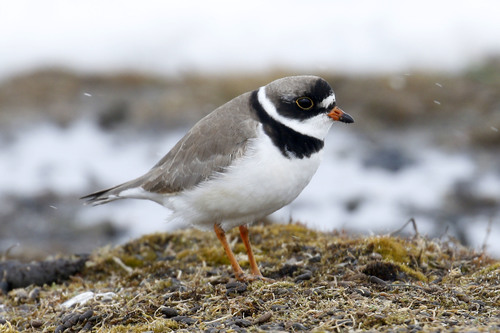
Semipalmated Plover
Charadrius semipalmatus
A pint-sized powerhouse of the shoreline, the Semipalmated Plover is a master of the dash-and-stop hunt. Known for its striking single neck band and incredible migratory journeys, it is a seasonal highlight for coastal wildlife watchers.
Quick Identification
Size
Length: 6.7–7.5 in (17–19 cm); Wingspan: 17–18.5 in (43–47 cm); Weight: 0.8–1.8 oz (22–50 g)
Colors
Brownish-gray upperparts and white underparts. Breeding adults feature a single black breast band, a black mask through the eyes, and a bright orange bill with a black tip. Legs are consistently yellow to orange.
Key Features
- Single dark neck band
- Bright orange or yellow legs
- Short bill with orange base during breeding
- White patch above the eye
- Partially webbed toes visible in clear tracks
When You’ll See Them
Behavior
The Semipalmated Plover is famous for its "run-and-pause" foraging technique. Unlike sandpipers that probe the mud continuously, this plover sprints a short distance, stops abruptly to scan the ground with its large eyes, and then lunges to snatch a worm or crustacean. This rhythmic movement makes them easy to spot even from a distance on a busy beach.
These birds are long-distance migrants, nesting in the Arctic tundra and wintering as far south as the coasts of South America. During migration, they are relatively social and can be found in small flocks, often mixing with other shorebirds. While they aren't typical backyard birds, those living near coastal mudflats or large inland lakes may see them stop over to refuel during their incredible journeys.
EverydayEarth exclusive
Camera Tips
To capture high-quality footage of the Semipalmated Plover, camera placement is everything. Since these birds are strictly ground-dwellers that forage along the water's edge, you should position your camera as low as possible. A ground-level mount or a small tripod weighted down in the sand is ideal. Aim the camera at a 5-10 degree upward angle from about 8 inches off the ground to capture the bird's facial markings and its signature "stop-and-stare" behavior at eye level.
Timing your camera deployment with the tides is the secret to success. Set up your gear in a tidal flat area about two hours before high tide. As the rising water pushes the birds toward the shore, they will be funneled directly toward your camera's field of view. Conversely, as the tide recedes, they follow the waterline out to find freshly exposed mud. Ensure your camera has a fast trigger speed (0.2s or less), as these birds move in sudden, rapid bursts that can easily result in a "ghost" image if the shutter is too slow.
Avoid using food lures, as Semipalmated Plovers are insectivores and won't be attracted to birdseed. Instead, look for natural "funnels" like narrow strips of beach between a marsh and the open water. If you are setting up on a private shoreline, maintaining a small area of damp, vegetation-free mud can act as a natural attractant. For the best visual results, ensure the sun is behind the camera during the early morning hours to make the orange legs and bill pop against the neutral tones of the sand.
Similar Species
Species that look similar or are commonly confused with Semipalmated Plover.
Killdeer
Much larger than the Semipalmated Plover and possesses two black neck bands instead of one.
Piping Plover
Much paler overall, looking like the color of dry sand, with a stubbier orange bill and different facial markings.
Wilson's Plover
Features a much larger, heavier all-black bill and duller pinkish-gray legs.
Frequently Asked Questions
Record Semipalmated Plover at your habitat
Connect a camera to start building your own species record — AI identifies every visitor automatically.