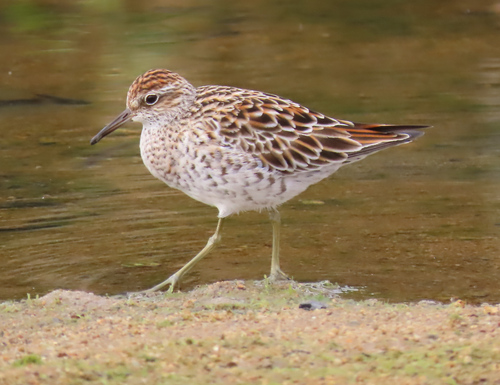
Sharp-tailed Sandpiper
Calidris acuminata
A champion of migration, the Sharp-tailed Sandpiper journeys across the globe with elegance and speed. Recognizable by its striking rufous cap and delicate, pointed tail, it is a favorite find for coastal and wetland explorers.
Quick Identification
Size
Length: 17–22 cm (6.7–8.7 in); Wingspan: 36–43 cm (14–17 in); Weight: 35–115 g (1.2–4.1 oz)
Colors
Rich rufous (reddish-brown) crown, buff breast with dark chevrons, and grey-brown scalloped upperparts; belly is white.
Key Features
- Tapered, pointed tail feathers
- Rich rufous crown, especially vibrant in juveniles
- Distinct white 'eyebrow' (supercilium) above a dark eye stripe
- V-shaped dark markings or 'chevrons' on the breast and flanks
- Yellowish-green to olive-colored legs
When You’ll See Them
Behavior
The Sharp-tailed Sandpiper is an energetic and social migratory wader, known for its incredible endurance as it travels between Siberian breeding grounds and Southern Hemisphere wintering spots. Unlike many other shorebirds that prefer the water's edge, these sandpipers are often found in slightly drier, grassy areas adjacent to wetlands. They are frequently seen in small to large flocks, often mixing with other species like Pectoral or Curlew Sandpipers to forage for food.
When feeding, they exhibit a rhythmic, focused probing motion, moving their heads up and down rapidly as they search the mud. While they can be wary of sudden movements, they are often less skittish than other waders, allowing patient observers to get a clear look. Their flight is fast and direct, often accompanied by a distinctive, sharp whistling call that helps identify them even before they land.
EverydayEarth exclusive
Camera Tips
To capture the best footage of a Sharp-tailed Sandpiper, your camera placement is everything. These birds are 'edge' specialists, preferring the muddy transition zone between shallow water and short grass. Set your camera on a ground-level mount or a low tripod just inches above the mud. This 'worm's eye view' creates a more intimate portrait and allows the camera to capture the fine details of their rufous plumage and tapered tail that are often lost from a higher angle.
Since these birds are highly attracted to receding water lines, look for areas where a pond or marsh is slowly drying out. If you have a private pond, you can encourage them to stop by keeping a section of the shoreline clear of tall reeds or thick brush, as they prefer wide-open sightlines to stay safe from predators. Position the camera with the sun at your back to highlight the rich chestnut tones in their crown, which can look dull or grey in heavy shadows.
Because shorebirds move quickly and their probing behavior involves rapid head movements, use a fast shutter speed or a high-frame-rate video setting (at least 60fps). This will prevent motion blur during their frantic feeding sessions. If your camera has a 'time-lapse' mode, set it to trigger every 2-5 seconds; this is an excellent way to monitor a mudflat over several hours as the birds follow the moving water line. During migration peaks in September, look for the brightly colored juveniles, which are often bolder and stay in one spot longer than the adults.
Similar Species
Species that look similar or are commonly confused with Sharp-tailed Sandpiper.
Pectoral Sandpiper
Has a distinct, sharp boundary between its streaked breast and white belly, whereas the Sharp-tailed has a more graduated, chevron-marked breast.
Curlew Sandpiper
Features a longer, more significantly down-curved bill and a bright white rump that is very obvious during flight.
Red-necked Stint
Much smaller in size with a shorter, straighter bill and lacks the heavy chevron markings on the flanks.
Frequently Asked Questions
Record Sharp-tailed Sandpiper at your habitat
Connect a camera to start building your own species record — AI identifies every visitor automatically.