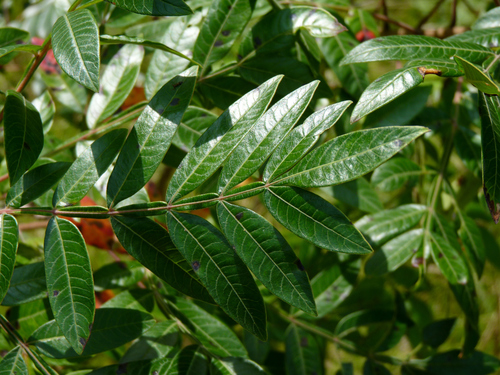
shining sumac
Rhus copallinum
Ignite your backyard with the brilliant crimson hues of the shining sumac. This stunning native shrub is more than just a seasonal showstopper; it is a vital sanctuary and winter cafeteria for your favorite local birds.
Quick Identification
Size
A medium to large shrub reaching 3.5–5.5 meters (11–18 feet) in height and width; young saplings typically reach 2.5 meters (8 feet) within five years.
Colors
Glossy dark green summer foliage; brilliant flame-red or burgundy autumn leaves; dark red or maroon velvety fruit clusters; brownish-gray bark.
Key Features
- Distinctive 'wings' or leafy ridges along the leaf stalk (rachis)
- Highly lustrous, shiny leaf surfaces that reflect sunlight
- Compact, pyramidal clusters of tiny dark red berries (drupes)
- Colonial growth habit often forming dense, rounded thickets
When You’ll See Them
Loading activity data...
Behavior
During the summer months, its yellowish-green flowers are a hub of activity for native pollinators. As autumn approaches, the plant undergoes a dramatic transformation, turning a deep, fiery red that is visible from great distances. In the winter, the plant takes on a more quiet, structural role, holding onto its seed clusters long after the leaves have fallen, providing a critical safety net for the local ecosystem during harsh weather.
EverydayEarth exclusive
Camera Tips
During the peak of the summer bloom in July, switch your camera to a 'Video' or 'High-Speed Burst' mode. The yellowish flowers are a magnet for specialized pollinators, including the giant swallowtail butterfly and various rare native bees. Using a higher frame rate will help you freeze the motion of these fast-moving insects against the backdrop of the sumac's glossy leaves.
Don't bring your cameras inside once the leaves fall. Winter is actually one of the most productive times for monitoring a shining sumac thicket. Because the fruit is high in calcium but low in fat, birds often leave it as a 'last resort' food. Set your camera to 'Motion-Trigger' with a wide-angle view of the whole shrub during February and March. You are likely to capture large flocks of overwintering songbirds or even deer browsing on the twigs when other food sources are buried under snow.
For the best lighting, face your camera North or South to avoid the direct glare of the sun reflecting off the sumac's exceptionally shiny leaves. This luster can cause 'white-out' on digital sensors during the middle of the day. A slightly shaded placement will help emphasize the deep textures of the red fruit and the architectural 'wings' on the leaf stems.
Similar Species
Species that look similar or are commonly confused with shining sumac.
Smooth Sumac
Lacks the winged ridges on the leaf stalks and has a more glaucous (whitish) coating on the stems.
Staghorn Sumac
Features velvety, hair-covered branches reminiscent of deer antlers, whereas shining sumac stems are mostly smooth.
Poison Sumac
Produces white, hanging berries and grows exclusively in very wet, swampy soils, unlike the red-berried shining sumac.
Frequently Asked Questions
Record shining sumac at your habitat
Connect a camera to start building your own species record — AI identifies every visitor automatically.