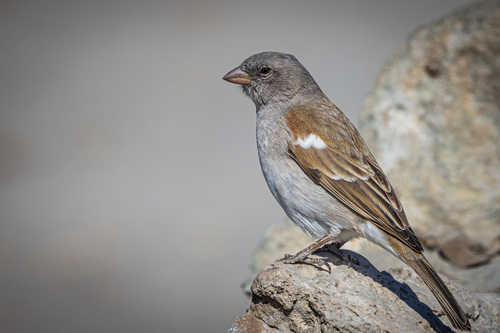
Southern Gray-headed Sparrow
Passer diffusus
A dapper and resilient neighbor, the Southern Gray-headed Sparrow is the quiet charm of the African backyard. With its clean gray hood and warm chestnut wings, it brings a touch of wild savanna elegance to every garden path.
Quick Identification
Size
Length: 14–16 cm (5.5–6.3 in); Weight: 20–30 g (0.7–1.1 oz)
Colors
Uniform soft gray head and neck; warm rufous-brown back, rump, and wings; pale gray to white underparts; thick black bill (breeding) or horn-colored bill (non-breeding).
Key Features
- Solid gray head without any white eyebrow or facial markings
- Rich rufous-brown rump visible in flight
- Small, subtle white wing bar
- Stocky build with a heavy, conical bill
When You’ll See Them
Behavior
The Southern Gray-headed Sparrow is a highly adaptable and social bird that has successfully transitioned from the wild African savannas into bustling suburban gardens. Unlike some of its more skittish relatives, this sparrow is relatively bold around human habitation, often seen hopping along patios or farmyards in search of fallen seeds or crumbs. They are typically found in pairs or small family groups, though they may congregate in larger flocks during the non-breeding season around abundant food sources.
These birds are known for their 'chrup' calls and persistent chirping, which can often be heard from the canopy of a garden tree or the edge of a roof. While they are primarily ground-foragers, they are also agile enough to glean insects from foliage. Their interaction with humans is largely commensal; they benefit from the shelter and food provided by urban landscapes and are increasingly common visitors to backyard bird tables across Southern Africa.
EverydayEarth exclusive
Camera Tips
To capture the best footage of the Southern Gray-headed Sparrow, placement is everything. Since these sparrows are primarily ground-feeders, position your camera low to the ground—about 6 to 12 inches high—facing a flat, cleared area. If you use a bird feeder, a tray-style or platform feeder is much more attractive to this species than a hanging tube feeder. Aim your camera at the platform with a slight downward angle to capture their characteristic hopping motion and social interactions.
Water is a massive draw for this species. They are frequent bathers and drinkers, especially in drier regions. Placing an AI camera near a shallow bird bath or a dripping water feature can yield fantastic high-speed action shots. Ensure the camera is set to a fast shutter speed or high frame rate (60fps if available) to freeze the motion of water droplets during their vigorous bathing sessions. A 'Burst Mode' setting is ideal here, as it captures the quick head-tilts and social posturing typical of the species.
For baiting, a mix of small birdseed, crushed maize, or even sunflower hearts works wonders. If you want to see their more predatory side, offering mealworms during the breeding season will often bring them right in front of the lens as they hunt for high-protein food for their chicks. In terms of timing, the first two hours of light are golden; the soft morning sun highlights the subtle rufous tones in their wings that can otherwise look dull in harsh midday light.
Lastly, pay attention to the background. These birds have a soft, monochromatic gray head that can blend into concrete or gray stone. Position your camera so the background consists of green foliage or dark soil to provide enough contrast for the AI to trigger reliably and for the bird’s features to pop in your photos. If your camera allows for sensitivity adjustments, set it to 'Medium-High' as these are small, fast-moving targets.
Similar Species
Species that look similar or are commonly confused with Southern Gray-headed Sparrow.
House Sparrow
Males have a black bib and white cheeks; females have a distinct pale 'eyebrow' stripe that the Gray-headed lacks.
Cape Sparrow
Bold black and white 'C' pattern on the head and neck, whereas the Southern Gray-headed is plain gray.
Northern Grey-headed Sparrow
Very similar but found further north; it generally has a slightly larger bill and lacks the distinct range overlap in the south.
Frequently Asked Questions
Record Southern Gray-headed Sparrow at your habitat
Connect a camera to start building your own species record — AI identifies every visitor automatically.