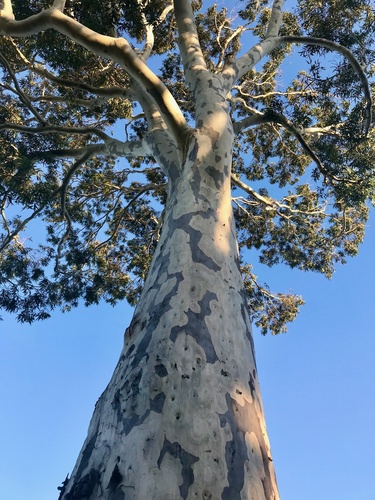
Spotted Gum
Corymbia maculata
Admired for its stunning mottled bark and towering height, the Spotted Gum is a quintessential Australian icon. It provides a vital high-altitude sanctuary for a diverse range of birds, pollinators, and nectar-loving wildlife.
Quick Identification
Size
Height of 20 to 45 metres (65 to 150 feet); trunk diameter typically up to 1.3 metres (4.3 feet).
Colors
Mottled bark in shades of grey, cream, pink, and bluish-grey; dark green adult leaves; creamy white flowers.
Key Features
- Distinctive mottled bark that sheds in irregular circular flakes
- Straight, tall trunk with a high-branching canopy
- Urn-shaped woody fruit (gumnuts) and clusters of white flowers
- Lance-shaped, dark green leaves with a faint eucalyptus scent
When You’ll See Them
Geographic range
Where Does the Spotted Gum Live?
Native to the Australian continent, the Spotted Gum is found primarily along the eastern coast and adjacent ranges. Its core range stretches from the southern coast of New South Wales up through the Gold Coast and into southeastern Queensland, with some disjunct populations in eastern Victoria. While it is endemic to Australia, its hardy nature has led to it being planted in various other countries with Mediterranean or subtropical climates for timber and ornamental use.
Basemap © OpenStreetMap contributors
Behavior
The Spotted Gum is a majestic evergreen known for its resilience and striking appearance. Unlike animals, its 'behavior' is defined by its seasonal cycles; it sheds its bark in irregular patches, creating the characteristic spotted pattern that gives it its name. This process helps the tree maintain a healthy trunk surface while revealing fresh, colorful layers of bark beneath that can range from soft pinks to deep greys.
Ecologically, this tree is a cornerstone species. It serves as a vital food source for honeyeaters, bees, and flying foxes during its flowering season, which typically occurs from winter to spring. In suburban backyards, it provides a high-rise habitat for various birds and arboreal mammals, offering essential nesting sites and a protective canopy that shelters smaller species from predators.
EverydayEarth exclusive
Camera Tips
To capture the full life of a Spotted Gum, position your camera at a slight upward angle facing the main trunk or lower branches. This allows you to witness the fascinating process of bark shedding, which creates a dynamic visual change over several weeks. If your camera is AI-powered, focus on the areas where the bark is peeling, as lizards and insects often hide in these crevices, attracting larger predators like Kookaburras or Butcherbirds.
During the flowering months (winter to spring), the canopy becomes a hive of activity. If possible, mount a secondary camera on a high branch or use a telephoto lens focused on the white flower clusters. You will likely capture honeyeaters, Lorikeets, and even nocturnal visitors like Possums or Flying Foxes that come for the nectar. High-quality night vision is essential here, as many of the most interesting mammal interactions occur after sunset.
For those monitoring from the ground, aim the camera at the base of the tree. The fallen bark and gumnuts create a rich micro-habitat for ground-dwelling creatures like Echidnas or small reptiles. Setting the camera to 'time-lapse' mode can also yield beautiful results, documenting the tree's seasonal bark changes and the shifting patterns of light and shadow through its high canopy over the course of a year.
Similar Species
Species that look similar or are commonly confused with Spotted Gum.
Lemon-scented Gum
Identified by its distinctive citrus scent when leaves are crushed and a more slender, often white-grey trunk.
Forest Red Gum
Has more irregular, larger patches of grey bark and distinctively shaped, longer flower buds.
Grey Gum
Bark has a more granular or 'gritty' texture and lacks the distinct circular spots of the Corymbia maculata.
Frequently Asked Questions
Record Spotted Gum at your habitat
Connect a camera to start building your own species record — AI identifies every visitor automatically.