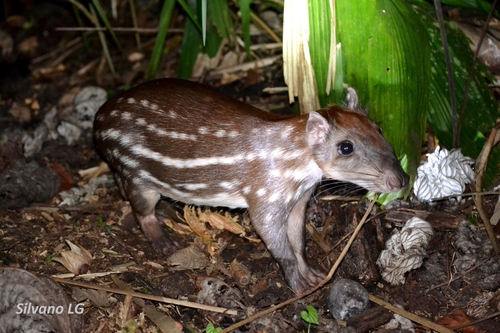
Spotted Paca
Cuniculus paca
Meet the 'Forest Gardener' of the tropics. With its striking white spots and nocturnal habits, the Spotted Paca is one of the most unique and elusive rodents in the Americas.
Quick Identification
Size
Length: 60-80 cm (24-31 in); Weight: 6-12 kg (13-26 lbs)
Colors
Dark brown to reddish-black coat with 4 to 7 horizontal rows of white spots along the flanks; creamy white underbelly
Key Features
- Distinctive horizontal rows of white spots on sides
- Large, blunt head with noticeably swollen cheekbones
- Stocky, powerful body with short legs
- Small, barely visible tail
When You’ll See Them
Geographic range
Where Does the Spotted Paca Live?
Native to the lush tropical and sub-tropical regions of the Americas, the Spotted Paca's range stretches from east-central Mexico down through Central America into the heart of South America, reaching as far as northern Argentina. They are common throughout the Amazon Basin in countries like Brazil, Peru, and Colombia, and have also been successfully introduced to Cuba and parts of Algeria.
Basemap © OpenStreetMap contributors
Behavior
The Spotted Paca is a shy, nocturnal mammal that spends its daylight hours tucked away in complex underground burrows or hollow logs. They are primarily solitary and highly territorial, often marking their paths with scent to navigate the dense undergrowth of the jungle floor. One of their most fascinating physical traits is their enlarged zygomatic arches (cheekbones), which act as resonance chambers, allowing them to produce loud, vibrating tooth-grinding sounds to warn off intruders.
While they are terrestrial, Spotted Pacas are exceptional swimmers and never stray too far from a water source. When a predator like a jaguar or ocelot threatens them, their first instinct is to dive into a nearby stream or river, where they can remain submerged or partially hidden for several minutes. In areas where they are not hunted, they can become somewhat accustomed to human presence, but they generally remain one of the more elusive sightings for backyard observers.
EverydayEarth exclusive
Camera Tips
Capturing a Spotted Paca on camera requires patience and a focus on water. Because these rodents are semi-aquatic and highly dependent on hydration, place your AI-powered camera along the muddy banks of creeks, ponds, or slow-moving streams. Position the camera low to the ground—no higher than 12 to 18 inches—to get a clear side-profile of their unique spotting pattern and to avoid overshooting their stocky frame.
Since Pacas are strictly nocturnal, ensure your camera has a high-quality infrared (IR) flash that won't spook them. Using a 'No-Glow' IR flash is preferable, as these animals are naturally skittish and may avoid an area if they detect a red glow or sudden light. Set your camera to take short video clips (10-15 seconds) rather than just stills; this allows you to observe their unique 'bobbing' walk and tooth-grinding behavior.
To attract them to your field of view, look for fallen fruit from native trees like figs, avocados, or mangos. If you are in a suburban edge environment, a small pile of fallen fruit or even sweet potatoes can serve as an effective lure. Because they follow established 'game trails' through the brush, look for worn paths in the leaf litter leading toward water sources and face your camera down the length of the trail for the best results.
Similar Species
Species that look similar or are commonly confused with Spotted Paca.
Central American Agouti
Active during the day and lacks the white spots found on the Paca's flanks.
Mountain Paca
Found at much higher altitudes in the Andes and has longer, thicker fur to cope with the cold.
Capybara
Much larger (up to 150 lbs), lacks spots, and is highly social rather than solitary.
Frequently Asked Questions
Record Spotted Paca at your habitat
Connect a camera to start building your own species record — AI identifies every visitor automatically.