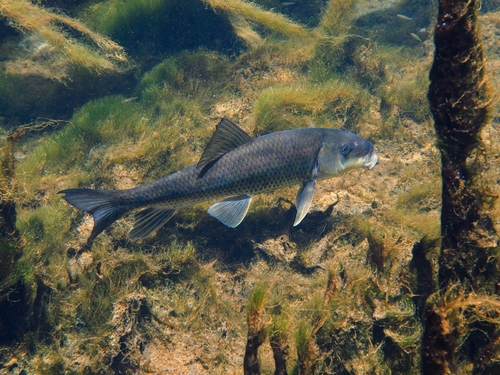
Spotted Sucker
Minytrema melanops
With its striking rows of dark spots and unique vacuum-like mouth, the Spotted Sucker is a hidden gem of North American waterways. Discover this elusive bottom-feeder as it navigates the clear pools and gravelly runs of your local river system.
Quick Identification
Size
23-46 cm (9-18 inches) in length; weight typically 0.5-1.3 kg (1-3 lbs)
Colors
Silver to olive-bronze back with a white belly; characterized by parallel rows of dark brownish-black spots on the scales
Key Features
- Distinctive horizontal rows of small dark spots
- Absence of a visible lateral line
- Subterminal mouth with fleshy lips for suction
- Deeply notched dorsal fin
When You’ll See Them
Geographic range
Where Does the Spotted Sucker Live?
Native to North America, the Spotted Sucker is primarily found throughout the Mississippi River basin and the Great Lakes drainage. Its range extends from southern Ontario down through the Gulf Coast states, reaching as far west as Texas and as far east as the Atlantic slope of the Carolinas. This species thrives in the river systems of the central and southeastern United States, where clear water and varied substrates are abundant.
Basemap © OpenStreetMap contributors
Behavior
The Spotted Sucker is a fascinating freshwater traveler that undergoes a significant lifestyle shift as it matures. While juveniles often swim in the mid-column acting as active predators of tiny plankton, adults transition into dedicated bottom-dwellers. They use their specialized downward-facing mouths to vacuum the riverbed, meticulously searching for small invertebrates hiding in the sediment.
Unlike many other fish species that are highly territorial, Spotted Suckers are relatively social, especially during their annual spring migration. During April and May, they congregate in large numbers to move into swifter riffles and shallower gravel beds for spawning. Outside of the breeding season, they are generally shy and prefer the safety of deep, quiet pools where they can forage undisturbed by surface activity.
EverydayEarth exclusive
Camera Tips
To capture the Spotted Sucker on your backyard or trail camera, you will need to utilize an underwater setup or a high-angle mount over a clear, shallow creek. Placing a waterproof action camera in a stable, weighted housing at the edge of a deep pool where it transitions into a riffle is the most effective method. Aim the lens slightly downward toward a patch of clean gravel or sand, as this is where the fish are most likely to pause and forage.
Lighting is your biggest challenge under the surface. For the best results, position your camera in a spot that receives direct midday sun, which penetrates the water column and highlights the metallic sheen and dark spots of the fish. If your backyard stream is murky after rain, wait for the water to settle; the Spotted Sucker is rarely seen in highly turbid conditions and the AI recognition software performs best in clear water.
During the spring spawning run in April and May, you can capture incredible footage by setting your camera in shallower 'run' areas (1-2 feet deep). You don't necessarily need bait, but disturbing a small patch of the riverbed to expose fresh insect larvae can act as a natural attractant. Set your camera to high-frame-rate video or burst photo mode to catch their quick, darting movements as they navigate the current.
Similar Species
Species that look similar or are commonly confused with Spotted Sucker.
Black Redhorse
Has a visible lateral line and lacks the distinct horizontal rows of spots found on the Spotted Sucker.
Golden Redhorse
Features golden-colored scales and a visible lateral line, whereas the Spotted Sucker is silver-bronze with dark spotting.
White Sucker
Has a much rounder snout and finer scales without the organized dark spots characteristic of the Spotted Sucker.
Frequently Asked Questions
Record Spotted Sucker at your habitat
Connect a camera to start building your own species record — AI identifies every visitor automatically.