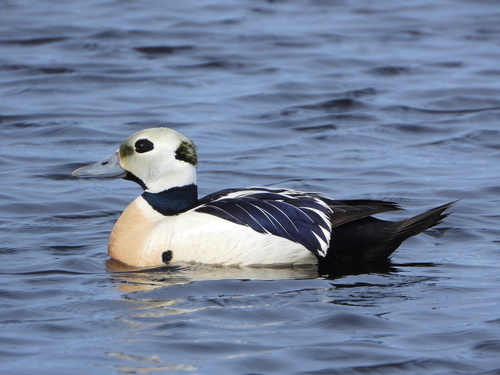
Steller's Eider
Polysticta stelleri
The smallest and swiftest of the sea ducks, the Steller's Eider is an Arctic gem known for its stunning cinnamon plumage and synchronized diving. This vulnerable traveler bridges the gap between the rugged Siberian coast and the icy waters of the Bering Sea.
Quick Identification
Size
Length 43–47 cm (17–18.5 in); wingspan 68–77 cm (27–30 in); weight 500–1000 g (1.1–2.2 lbs)
Colors
Males: White head with green/black spots, cinnamon breast, black back. Females: Dark mottled brown with blue-white wing speculum.
Key Features
- Smallest and fastest-flying eider species
- Male has distinctive tawny-buff underparts and black throat collar
- Square-ish head shape compared to other ducks
- Blue speculum with white borders on both sexes
When You’ll See Them
Geographic range
Where Does the Steller's Eider Live?
The Steller's Eider is a true specialist of the high north, originating from the Arctic coastlines of the Palearctic and Nearctic. Its core range is concentrated along the northern coasts of Russia (Siberia) and Alaska, specifically within the Bering Sea region. During the winter, significant populations migrate to the ice-free waters of the Aleutian Islands and the Baltic Sea, where they can be found hugging the shorelines of countries like Norway and Sweden.
Basemap © OpenStreetMap contributors
Behavior
Steller's Eiders are highly social sea ducks known for their remarkable synchronized behavior. When foraging in large wintering flocks, they often dive and resurface in unison, creating a rhythmic pulsing effect on the water's surface. They are incredibly fast flyers, often staying low over the water in tight, aerodynamic formations that differentiate them from the more lumbering flight of larger eider species.
During the breeding season, they transition from marine environments to freshwater tundra pools. While they are generally wary of humans, they can be observed at closer range in specific wintering harbors, such as those in Alaska or Scandinavia. Their social structure is complex, with pair bonds usually forming on the wintering grounds before the long migration back to Arctic nesting sites.
EverydayEarth exclusive
Camera Tips
Capturing the Steller's Eider on camera requires a specialized approach due to their coastal and Arctic habitats. For those living along the Alaskan or Baltic coastlines, position your camera on a sturdy tripod or a low-profile ground mount near the high-tide line of sheltered lagoons or rocky points. Because these birds are smaller than other eiders, a low angle—ideally just 12 to 18 inches off the ground—will provide a much more intimate and impressive perspective of their striking plumage.
Since these birds are often found in freezing environments, battery life is your greatest challenge. Use external battery packs or high-quality lithium batteries, as standard alkalines will fail rapidly in the sub-zero temperatures typical of eider habitats. If you are setting up near salt water, ensure your camera housing is weather-sealed and wiped down regularly to prevent salt spray from clouding the lens or corroding the seals.
Timing is everything with this species. Set your camera to burst mode or high-speed video to capture their synchronized diving behavior, which usually peaks during the mid-morning feeding sessions. They are most active during daylight hours, so there is little need for infrared flash unless you are tracking nocturnal predators in the area. Focus on areas where the water remains ice-free and shallow, as these are their primary foraging 'hotspots' during the lean winter months.
Similar Species
Species that look similar or are commonly confused with Steller's Eider.
King Eider
Much larger with a massive orange bill plate and a light blue crown on the male.
Harlequin Duck
Similar size and coastal habitat, but the male is slate-blue with white and chestnut markings, lacking the Steller's white head.
Common Eider
The largest eider species, featuring a long, sloping profile and lacking the tawny-orange breast of the Steller's male.
Frequently Asked Questions
Record Steller's Eider at your habitat
Connect a camera to start building your own species record — AI identifies every visitor automatically.