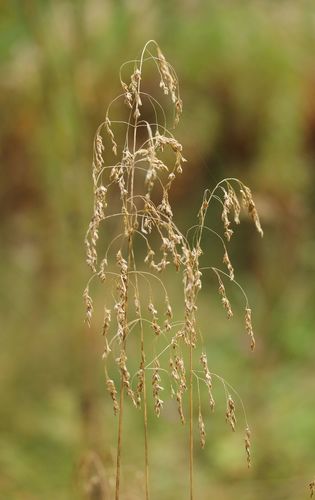
tufted hair grass
Deschampsia cespitosa
A shimmering masterpiece of the meadow, tufted hair grass creates delicate clouds of gold and silver that dance in the breeze. This hardy native grass is a favorite for photographers and a vital sanctuary for backyard pollinators.
Quick Identification
Size
Mounds grow 1-2 feet (30-60 cm) wide and tall; flower stalks reach heights of 3-5 feet (0.9-1.5 meters).
Colors
Dark, deep green foliage; flower panicles appear in shades of silver, purple, and bronze, maturing to a golden-straw color.
Key Features
- Dense, mounded 'tussock' growth habit
- Very narrow, dark green leaves with rough edges
- Airy, cloud-like flower panicles that rise high above the foliage
- Shimmering seed heads that catch the light
When You’ll See Them
Behavior
Tufted hair grass is a long-lived perennial cool-season grass known for its elegant, architectural form. Unlike many grasses that spread aggressively via runners, this species stays in tidy, well-behaved clumps called tussocks. It begins its growth cycle early in the spring when temperatures are still cool, providing early-season texture and habitat for ground-dwelling insects and small mammals.
As an ecological powerhouse, it serves as a critical larval host for several species of butterflies, including various types of Skippers and Browns. Its dense base provides excellent nesting sites for birds and cover for small amphibians in damp areas. While it is quite hardy, it thrives best in spots where it doesn't have to compete with larger, more dominant meadow species, often occupying the wetter or more shaded niches of a landscape.
EverydayEarth exclusive
Camera Tips
To capture the ethereal beauty of tufted hair grass, camera placement is everything. Position your camera at a low angle, roughly 12 to 18 inches off the ground, looking slightly upward through the flower panicles. This perspective emphasizes the height of the plumes and allows you to catch the 'cloud' effect of the seeds against the sky. For the best visual results, ensure your camera is facing toward the sun (backlighting) during the 'golden hours' of early morning or late afternoon. The light will catch the fine hairs of the seed heads, making the entire plant appear to glow.
Because this grass moves beautifully in the wind, it is a perfect subject for time-lapse photography or high-frame-rate video. If your camera has a 'motion' setting, be aware that the swaying stalks can trigger many false positives on trail cams. To avoid this while still capturing wildlife, set your camera's sensitivity to medium and focus the trigger zone on the base of the plant where small mammals or ground birds are likely to move, rather than on the swaying tops.
In the winter, don't pack the camera away. Tufted hair grass maintains its structure even under light snow. Capturing the contrast between the golden, dried stalks and a fresh snowfall creates some of the most striking backyard photography possible. If you are using an AI-powered camera like the ones we feature on EverydayEarth, try to frame the grass as a foreground element; the AI can often identify the birds that come to feed on the seeds, such as juncos or finches, using the grass as a natural stage.
Similar Species
Species that look similar or are commonly confused with tufted hair grass.
Purple Moor Grass
Has more rigid, upright flower spikes compared to the airy, cloud-like panicles of tufted hair grass.
Blue Oat Grass
Features distinct blue-gray foliage and prefers much drier, sunnier conditions than the moisture-loving hair grass.
Switchgrass
Grows significantly taller and has a coarser texture with wider leaf blades.
Frequently Asked Questions
Record tufted hair grass at your habitat
Connect a camera to start building your own species record — AI identifies every visitor automatically.