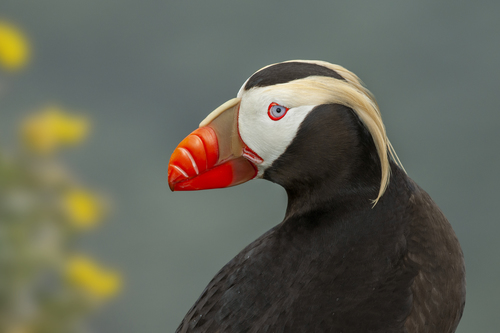
Tufted Puffin
Fratercula cirrhata
With its iconic golden plumes and massive orange bill, the Tufted Puffin is often called the 'sea parrot.' These charismatic divers spend their winters in the open ocean and their summers nesting on the rugged cliffs of the North Pacific.
Quick Identification
Size
Length: 36–41 cm (14–16 in); Wingspan: 64–66 cm (25–26 in); Weight: 520–1,000 g (1.1–2.2 lbs)
Colors
Breeding adults have a black body, white face, and large red-orange bill. Distinctive long, yellow plumes sweep back from above the eyes.
Key Features
- Large, triangular red-orange bill with greenish base
- Sweeping yellow head plumes (tufts) during breeding season
- Solid black plumage on body and wings
- Bright orange-red webbed feet
When You’ll See Them
Geographic range
Where Does the Tufted Puffin Live?
The Tufted Puffin is a true North Pacific specialist, roaming the vast waters between Asia and North America. Their native range extends from the northern reaches of Japan and Russia, across the Aleutian Islands, and down the Pacific coast of North America as far south as the Channel Islands in California. While they are most concentrated in the high-latitude waters of the Bering Sea and the Gulf of Alaska, these hardy voyagers are a staple of the entire North Pacific rim.
Basemap © OpenStreetMap contributors
Behavior
During the breeding season, their behavior revolves around chick-rearing. You'll often see them returning to the colony with several small fish held crosswise in their bills, a feat made possible by specialized serrations in their mouths. Unlike many other seabirds, they are relatively quiet on land, though they may emit low growling sounds from within their burrows during territorial disputes or mating rituals.
EverydayEarth exclusive
Camera Tips
Because puffins are most active at land-based colonies during the breeding season (late spring through summer), timing is everything. Set your camera to take bursts of photos or short 15-second video clips. Puffins move surprisingly fast when they land, and a single photo might miss the action. They are most active during the early morning and late afternoon when they return from foraging trips with bills full of fish for their 'puffinlings'. Using a high shutter speed or 'action' mode is essential to freeze the motion of their rapid wingbeats.
Avoid using bait or lures, as these can disrupt the sensitive ecosystem of a seabird colony and potentially attract predators like gulls or ravens. Instead, rely on natural pathways. Look for areas of flattened grass or 'guano' spots near burrow entrances which indicate high traffic. For the best lighting, aim for a western-facing slope during sunset to catch the golden light hitting their vibrant orange bills. Always check local regulations before placing cameras, as many puffin colonies are protected sanctuaries where human presence is restricted to specific zones.
Similar Species
Species that look similar or are commonly confused with Tufted Puffin.
Horned Puffin
Features a white belly and lacks the long, flowing yellow plumes of the Tufted Puffin.
Atlantic Puffin
Found only in the Atlantic Ocean; has a white chest and face and is smaller than the Tufted Puffin.
Rhinoceros Auklet
Lacks the bright orange bill and white face; has a small 'horn' on the bill and darker, more muted plumage.
Frequently Asked Questions
Record Tufted Puffin at your habitat
Connect a camera to start building your own species record — AI identifies every visitor automatically.