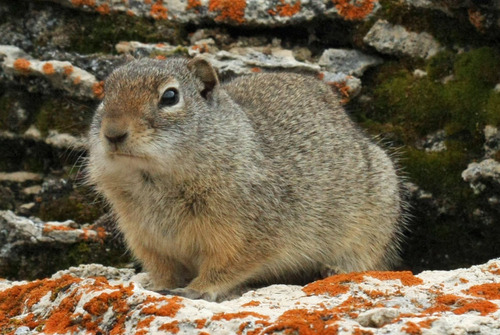
Uinta Ground Squirrel
Urocitellus armatus
The spirited 'sentinel' of the West, the Uinta ground squirrel is a master of the short summer, known for its upright posture and iconic whistling alarm.
Quick Identification
Size
11–12 inches (28–30 cm) in length; 7–21 oz (200–600 g) in weight
Colors
Brownish-gray upper coat with fine black speckling; buff or cream-colored belly; tail is dark gray to black on the underside
Key Features
- Stocky 'potgut' build
- Small, rounded ears set low on the head
- Short tail compared to tree squirrels
- Sharp, metallic whistling alarm call
When You’ll See Them
Behavior
Uinta ground squirrels are energetic, social rodents best known for their incredibly short active season. Because they live in high-altitude environments with harsh winters, they spend nearly eight or nine months of the year in underground hibernation. They emerge in early spring, often while snow is still on the ground, and spend every waking moment of the summer feeding to build up the fat reserves necessary for their long winter sleep.
These squirrels are highly vocal and serve as the 'sentinels' of the meadow. You will often see them standing perfectly upright on their hind legs to scan for predators like hawks, badgers, or coyotes. When one senses danger, it emits a piercing chirp that alerts the entire colony to retreat into their complex network of burrows. Despite their skittish nature toward predators, they can become quite bold around humans in parks and suburban backyards, especially if food is available.
EverydayEarth exclusive
Camera Tips
To capture the best footage of Uinta ground squirrels, placement is everything. These are ground-dwelling creatures, so mount your camera very low—ideally between 6 and 10 inches off the ground. Aiming the camera toward a known burrow entrance or a flat 'lookout' rock will yield the most consistent results. Because they move with quick, jerky motions, set your camera to a high trigger speed or use a 'Video' mode with a 20-second duration to ensure you catch the full range of their social interactions.
Uinta ground squirrels are most active during the warmest parts of the day, so you don't need to worry much about night vision or infrared performance. Instead, focus on the sun's position. Place your camera facing north or south to avoid direct lens flare during the morning and afternoon peaks. If you have a camera with an adjustable focal length or a macro lens, this is a great species to test it on, as they will often come very close to stationary objects once they feel safe.
While we don't recommend feeding wildlife, you can encourage them to pose in front of your lens by placing a few flat stones in a sunny clearing. They love to use these as 'stages' for their sentinel behavior. If your backyard has a bird feeder, simply placing the camera near the spilled seed on the ground is a guaranteed way to capture a 'potgut' in action. Be sure to check your camera frequently during June and July, as this is when the juveniles emerge, providing some of the most entertaining and high-energy footage of the year.
Similar Species
Species that look similar or are commonly confused with Uinta Ground Squirrel.
Belding's Ground Squirrel
Smaller with a distinct reddish-brown streak down the back and a shorter, flatter tail.
Richardson's Ground Squirrel
Has a longer, more noticeable tail and more yellowish-tan fur compared to the Uinta's grayish coat.
Rock Squirrel
Much larger with a long, bushy tail similar to a tree squirrel; prefers rocky outcrops over open meadows.
Frequently Asked Questions
Record Uinta Ground Squirrel at your habitat
Connect a camera to start building your own species record — AI identifies every visitor automatically.