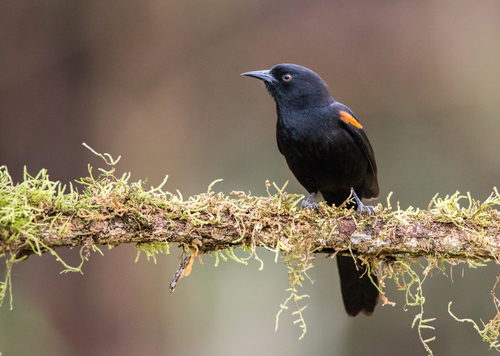
Variable Oriole
Icterus pyrrhopterus
A sleek, jet-black gymnast of the canopy, the Variable Oriole is a master of acrobatics and a frequent star of South American backyard cameras. Its striking golden shoulder patches make it one of the most sophisticated-looking visitors to any garden station.
Quick Identification
Size
17-19 cm (6.7-7.5 inches) in length; 30-35 g (1.1-1.2 oz)
Colors
Glossy black body with prominent yellow or golden-orange shoulder patches (epaulets); dark eyes and a black, slightly decurved bill.
Key Features
- Uniformly black plumage excluding shoulders
- Bright yellow or tawny 'epaulet' patches
- Slender, acrobatic build
- Medium-length, rounded tail
When You’ll See Them
Behavior
The Variable Oriole is an energetic and highly agile songbird known for its acrobatic foraging maneuvers. It is common to see them hanging upside down from terminal branches or flower clusters to reach nectar and hidden insects. They are social birds, typically found in pairs or small family units, and they frequently communicate with a series of liquid whistles and chattering calls that help them stay in contact through dense foliage.
In backyard settings, these birds are curious but can be initially cautious. They quickly learn the locations of reliable food sources and will become regular visitors once they feel safe. Unlike some more aggressive blackbirds, Variable Orioles tend to be more discreet, moving gracefully through the mid-to-upper canopy before descending to garden feeders. They are also known for building intricate, hanging nests woven from plant fibers.
EverydayEarth exclusive
Camera Tips
To capture high-quality footage of the Variable Oriole, camera placement should be elevated. These birds are naturally arboreal and feel most comfortable feeding at a height of 5 to 10 feet. Mounting your camera on a fence post or tree trunk facing a nectar feeder or a fruit tray is highly effective. Ensure the camera is angled to catch the 'landing zone'—a nearby branch where the bird will likely pause to scan for predators before hopping onto the feeder.
Using specific lures is the best way to guarantee a 'visit' for your AI camera. Variable Orioles are particularly attracted to halved oranges, overripe bananas, or specialized nectar feeders. If you use a nectar feeder, ensure it has a sturdy perch, as these birds prefer to sit while they drink. During the nesting season, offering high-protein snacks like mealworms in a shallow dish can also draw them into the camera's field of view. Position your setup in a spot that receives bright, indirect light; direct, harsh sunlight can cause the bird's glossy black feathers to lose detail in the highlights.
Because Variable Orioles are quick and twitchy, set your camera to a high sensitivity or use 'burst mode' if available. A fast shutter speed is essential to freeze their movement and capture the vibrant contrast of the yellow epaulet against the black wing. If your camera supports custom detection zones, focus the trigger area on the feeder itself but leave enough of a wide angle to capture the bird's flight path as it approaches. Early morning is the golden hour for these birds, as they are most active and their vocalizations will often alert you to their presence before they even hit the sensor.
Similar Species
Species that look similar or are commonly confused with Variable Oriole.
Epaulet Oriole
Very similar, but typically has a more restricted range in the northern parts of South America and subtle differences in wing coloration.
Shiny Cowbird
Similar size and all-black plumage, but lacks the distinctive yellow shoulder patches and has a shorter, thicker bill.
Golden-winged Cacique
Larger with a pale, pointed bill and much more extensive yellow on the wings and rump.
Frequently Asked Questions
Record Variable Oriole at your habitat
Connect a camera to start building your own species record — AI identifies every visitor automatically.