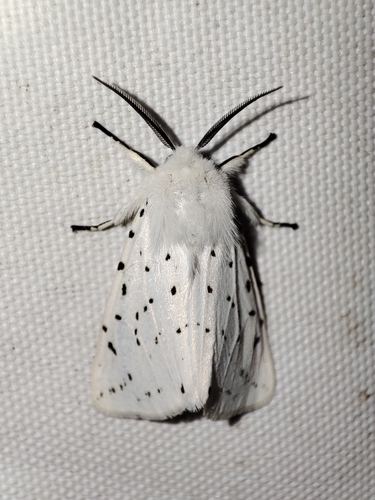
White Ermine
Spilosoma lubricipeda
The White Ermine is a masterpiece of nocturnal camouflage and elegance, sporting a snowy-white coat and hidden flashes of warning color. A common yet enchanting sight in the midnight garden, it is a favorite for backyard naturalists using light-based observation.
Quick Identification
Size
Wingspan of 34–48 mm (1.3–1.9 inches)
Colors
Brilliant white wings with variable black speckling; the abdomen is bright orange or yellow with black dorsal spots.
Key Features
- Snow-white wings with scattered black dots
- Hairy, white 'ermine' thorax
- Bright orange/yellow abdomen with black spots
- Wings held tent-like over the body at rest
When You’ll See Them
Behavior
The White Ermine is a frequent and elegant visitor to gardens across its range, known for its striking white appearance and curious defense mechanisms. Despite its delicate look, it is a hardy survivor. When threatened by a predator, such as a bird or a small mammal, the moth often drops to the ground and feigns death. During this display, it may curl its body to reveal its bright orange abdomen, a signal known as aposematism that warns predators of its bitter taste and chemical toxicity.
As a nocturnal species, it spends its daylight hours hiding in deep vegetation or on the undersides of leaves where its white color can sometimes mimic bird droppings to avoid detection. They are solitary creatures but are highly sensitive to light, often resulting in multiple individuals congregating around porch lights or windows on warm summer nights. Their flight is somewhat erratic but purposeful as they search for mates during their short adult lifespan.
EverydayEarth exclusive
Camera Tips
To capture high-quality footage of the White Ermine, you need to leverage their natural attraction to light. Setting up a 'moth wall' is the most effective method: hang a white cotton sheet vertically and shine a UV or mercury vapor light directly onto it. Position your AI-powered camera on a tripod roughly 3 to 4 feet from the sheet. Ensure your camera is set to a macro or close-focus mode, as these moths are relatively small and the intricate dot patterns are best captured in high detail.
Because the White Ermine is most active during the deepest parts of the night, use a camera with excellent low-light performance or infrared capabilities. However, since the goal is often to see their stark white color, a slow-release flash or a dim, consistent external LED light source can help maintain color accuracy without washing out the subject. Set your trigger sensitivity to high, as moths land softly and may not trigger standard motion sensors designed for larger mammals.
Seasonality and weather are critical for success. Target warm, humid nights with little to no wind, as White Ermines are most active when the air is 'heavy.' Avoid nights with a full moon, as the natural light competing with your trap can reduce the number of visitors. If your camera supports time-lapse, set it to take a photo every 60 seconds from dusk until dawn to document the arrival of different individuals and other nocturnal insects that share the habitat.
Similar Species
Species that look similar or are commonly confused with White Ermine.
Buff Ermine
Distinguished by its cream-to-yellowish ground color and a diagonal line of spots on the forewing.
Water Ermine
Very similar but usually has fewer black spots (sometimes none) and is found primarily in marshy or wetland habitats.
Muslin Moth
Female Muslin Moths are white but have fewer, more distinct spots and lack the bright orange abdomen found on the White Ermine.
Frequently Asked Questions
Record White Ermine at your habitat
Connect a camera to start building your own species record — AI identifies every visitor automatically.