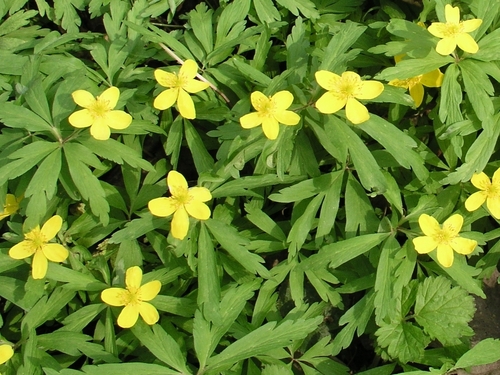
Yellow Anemone
Anemonoides ranunculoides
A golden herald of the spring woods, the Yellow Anemone transforms the forest floor into a sun-drenched carpet long before the trees find their leaves. This resilient perennial is a master of timing, blooming in a race against the shade.
Quick Identification
Size
Stands 5–15 cm (2–6 in) tall with a horizontal spread of 10–20 cm (4–8 in) via underground rhizomes.
Colors
Brilliant buttery yellow flowers; deep green, palmately lobed foliage; occasionally reddish-brown stems.
Key Features
- Bright yellow star-shaped flowers with 5-8 sepals
- Deeply divided, tri-lobed whorled leaves
- Usually bears two flowers per stem unlike the Wood Anemone
- Low-growing, carpet-forming habit blooming in early spring
- Rhizomatous root system that spreads horizontally.
When You’ll See Them
Behavior
The Yellow Anemone is a classic spring ephemeral, a group of plants that rush to complete their life cycle in the brief window between the thawing of the ground and the closing of the forest canopy. Because they live on the forest floor, they must bloom and photosynthesize before the trees above grow their leaves and block the sunlight. This plant is known for its 'sleepy' behavior; the flowers are phototropic, meaning they follow the sun during the day and close their petals tightly at night or during rain to protect their precious pollen from getting damp.
While they don't move across the landscape like animals, they are quite active in their own way, spreading slowly through the soil via ginger-like rhizomes to form vast golden carpets. They are a critical early-season resource for the first emerging pollinators. However, like many members of the buttercup family, they contain protoanemonin, a chemical that makes them unpalatable to most grazers like deer or rabbits, ensuring their survival in high-traffic wildlife areas.
EverydayEarth exclusive
Camera Tips
Capturing the Yellow Anemone requires a 'macro' mindset. To get those stunning, professional-looking shots, mount your camera on a ground stake or a beanbag just 2-4 inches above the soil. A low angle looking slightly upward makes these small flowers appear majestic and captures the detail of the delicate sepals and the cluster of yellow stamens at the center. If your camera has a macro mode or a close-focus setting, this is the time to use it.
Time-lapse photography is the most rewarding way to monitor this species. Because the Yellow Anemone opens and closes based on light and temperature, a photo taken every 15 minutes from dawn until dusk will reveal a fascinating 'dance.' You'll see the flowers perk up and expand as the sun hits them, then bow and tuck themselves away as the evening chill sets in. This is a fantastic way to utilize AI cameras that might otherwise be waiting for animal movement.
Pay close attention to your background. In the early spring, the forest floor is often covered in messy brown leaf litter. To make your Yellow Anemone pop, gently clear away any distracting dead twigs or large dry leaves from the immediate foreground before setting your camera. This ensures the AI's autofocus locks onto the vibrant yellow of the bloom rather than a stray piece of debris. For lighting, dappled morning sun provides the most texture without blowing out the bright yellow colors that can happen in harsh midday light.
Similar Species
Species that look similar or are commonly confused with Yellow Anemone.
Wood Anemone
Nearly identical in leaf shape and size, but produces white or pale pink flowers instead of yellow.
Lesser Celandine
Features glossier, waxy petals and smooth, heart-shaped leaves rather than the lobed leaves of the anemone.
Winter Aconite
Blooms earlier and has a distinctive 'green ruff' of leaves immediately below the flower head.
Frequently Asked Questions
Record Yellow Anemone at your habitat
Connect a camera to start building your own species record — AI identifies every visitor automatically.