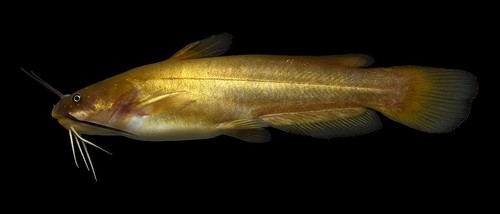
Yellow Bullhead
Ameiurus natalis
The ultimate survivor of the backyard pond, the Yellow Bullhead is a nocturnal navigator that uses its sensitive whiskers to rule the murky depths. With its distinct golden hue and hardy nature, this catfish is a fascinating subject for any underwater explorer.
Quick Identification
Size
8 to 14 inches (20 to 35 cm) in length; typically weighs 1 to 2 lbs (0.45 to 0.9 kg).
Colors
Olive, yellowish, or brown back with a distinct pale yellow or white belly; chin barbels are always white or light yellow.
Key Features
- White or yellow chin barbels (whiskers)
- Rounded tail fin, not forked
- Scaleless, smooth skin with a yellowish cast
- Sharp, serrated pectoral spines
When You’ll See Them
Behavior
Yellow Bullheads are resilient bottom-feeders that rely more on their sense of touch and smell than their eyesight. They are famously hardy, capable of surviving in water with low oxygen levels where other fish might perish. During the daylight hours, they are relatively sedentary, tucking themselves away in dense vegetation, hollow logs, or under cutbanks to avoid larger predators.
As the sun sets, these catfish become active foragers. They navigate the murky depths using their eight sensitive barbels, which are covered in taste buds, to locate prey hidden in the mud. While generally peaceful, they are opportunistic and will defend their nesting sites vigorously during the spring spawning season. For humans, they are a common sight in backyard ponds and slow-moving creeks, often being the first fish a young angler might encounter.
EverydayEarth exclusive
Camera Tips
Capturing the Yellow Bullhead requires an underwater setup, ideally using a submersible action camera or a specialized pond camera. For the best results, place your camera on the floor of a shallow, vegetated area of your pond or local creek. Position the lens horizontally, just a few inches above the substrate, and aim it toward a small clearing near submerged logs or lily pad stems. Because bullheads are bottom-dwellers, a top-down angle often misses the interesting detail of their barbels and facial structure.
Since these fish are primarily nocturnal, your camera’s infrared (IR) capabilities are crucial. Standard white light can overexpose the fish's reflective skin and may spook them. Set your camera to record short, high-resolution clips rather than long continuous feeds to preserve battery life. If your camera has a 'night mode' with high ISO sensitivity, ensure it is active to catch the subtle movements of the fish as they glide through the shadows.
To guarantee a sighting, use scent-based lures. Yellow Bullheads have an extraordinary sense of smell. Place a small perforated container or mesh bag filled with high-protein bait—like crushed worms, canned corn, or even a bit of damp cat food—about 18 inches away from the lens. Secure the bait with a weight so the fish don't drag it out of the frame. This will encourage the bullheads to linger in the 'strike zone' of your camera, providing excellent close-up footage of them 'tasting' the water with their whiskers.
Timing is everything when filming bullheads. While they are active year-round, the late spring is particularly rewarding. This is when they move into shallower water to spawn. If you can locate a small circular depression in the mud or gravel, this is likely a nest. Positioning a camera nearby during June or July might reward you with rare footage of the male bullhead guarding a shimmering ball of 'fry' (baby fish), which stay close to the parent for several weeks after hatching.
Similar Species
Species that look similar or are commonly confused with Yellow Bullhead.
Black Bullhead
Has dark black or gray chin whiskers and a slight notch in the tail fin, unlike the Yellow Bullhead's white whiskers and rounded tail.
Brown Bullhead
Features distinct dark mottling or 'blotches' on its sides and dark chin whiskers, compared to the Yellow Bullhead's more solid color and light whiskers.
Channel Catfish
Grows much larger and has a deeply forked tail, whereas the Yellow Bullhead has a rounded tail and stays relatively small.
Frequently Asked Questions
Record Yellow Bullhead at your habitat
Connect a camera to start building your own species record — AI identifies every visitor automatically.