Yucatán Molly
Poecilia velifera
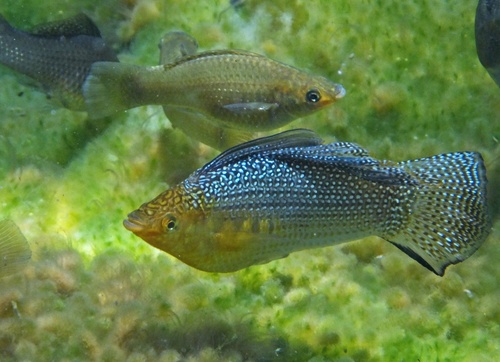
The Yucatán Molly is a jewel of the Mexican coast, famous for the male's spectacular sail-like fin and shimmering iridescent spots. A master of adaptation, this hardy livebearer thrives in everything from freshwater cenotes to salty coastal lagoons.
Quick Identification
Size
Typically 10 to 15 cm (4 to 6 inches) in length; females are slightly larger and heavier than the showy males.
Colors
Olive-gray body with rows of iridescent blue and gold spots; males feature a spectacular, oversized dorsal fin patterned with dark spots and orange borders.
Key Features
- Massive sail-like dorsal fin in mature males
- Rows of shimmering, pearl-like spots along the flanks
- Upturned mouth adapted for surface feeding
- Compact, stocky body with a broad, rounded tail fin
When You’ll See Them
Geographic range
Where Does the Yucatán Molly Live?
Native to the North American continent, the Yucatán Molly is a specialized resident of the Yucatán Peninsula in southeastern Mexico. Its core range spans the coastal waters of Quintana Roo, Yucatán, and Campeche, where it thrives in the unique transition zones between land and sea. While primarily a Mexican endemic, escaped or released populations have been occasionally noted in tropical regions of Florida and parts of Southeast Asia, though these are typically considered invasive or non-native occurrences.
Basemap © OpenStreetMap contributors
Behavior
The Yucatán Molly is a highly social and active fish, often found in loose shoals where they spend the majority of their day foraging. They are renowned for the dramatic courtship displays of the males, who flare their enormous dorsal fins to attract females and intimidate rivals. Despite their small size, they are hardy and adaptable, capable of moving between fresh, brackish, and even high-salinity marine environments.
In a backyard pond or lagoon setting, these fish are bold and visible, frequently seen hovering near the surface to gulp air or graze on algae. They are generally peaceful but have a complex social hierarchy based on size and fin development. Because they are livebearers, their social structure is often dominated by the presence of numerous fry hiding in aquatic vegetation to avoid predation by larger adults.
EverydayEarth exclusive
Camera Tips
To capture the stunning iridescent scales and sail-like fins of the Yucatán Molly, an underwater camera setup is essential. Place your camera in the shallow margins of a pond or lagoon, approximately 15–30 centimeters (6–12 inches) below the surface, facing toward a patch of sunlight. These fish are most active and showy when the water is warm and brightly lit, which makes the colors on the male's fin pop against the aquatic background.
If you are using a glass-fronted aquarium or a clear-walled pond, position the camera externally at a slight 45-degree angle to the glass to minimize glare and reflections. For the best action shots, place a textured rock or piece of driftwood covered in green algae in the camera's field of view. The mollies will naturally congregate here to graze, providing excellent opportunities for close-up footage of their feeding behavior and social interactions.
High-frame-rate settings (60fps or higher) are highly recommended because these fish move with sudden, darting motions. Capturing them in slow motion allows you to see the intricate way the male unfurls his dorsal fin during courtship displays. Since they are attracted to movement at the surface, a small amount of floating fish food can be used as a lure to bring a shoal directly in front of your lens during peak daylight hours.
Similar Species
Species that look similar or are commonly confused with Yucatán Molly.
Sailfin Molly
Smaller overall size and a shorter dorsal fin with fewer fin rays (14 vs 18-19).
Shortfin Molly
Lacks the high sail-like dorsal fin entirely, with a much more streamlined and plain appearance.
Guppy
Much smaller body size and males have varied, flowing tail shapes rather than the distinct sail-like dorsal fin.
Frequently Asked Questions
Record Yucatán Molly at your habitat
Connect a camera to start building your own species record — AI identifies every visitor automatically.